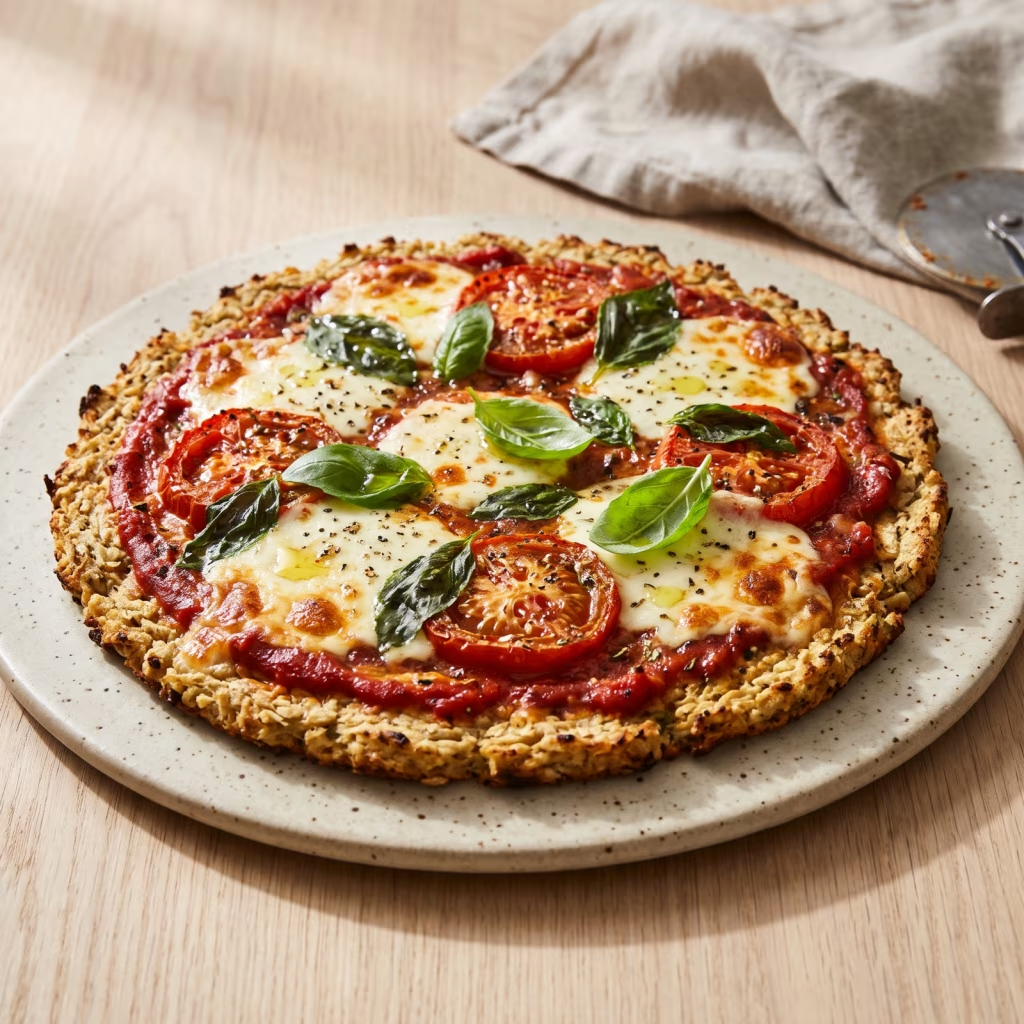
Margherita on a crispy cauliflower base
A base of cauliflower, egg and Parmesan baked until golden, then topped like a margherita with tomato, mozzarella and basil. The cauliflower base is a modern invention, created to make pizza without flour. The topping is that of the Neapolitan margherita.
- Time55 min
- Servings2
- DifficultyMedium
- MealLunch
Ingredients
servingsMethod
- Heat the oven to 220 °C and chop the cauliflower into rice-sized grains.
- Cook it for 5 minutes in the microwave or in a pan, then squeeze it very well in a tea towel.
- Mix it with the egg, Parmesan, oregano and salt and spread it thinly on baking paper.
- Bake the base for 20 minutes, until golden.
- Add the passata and mozzarella, return to the oven for another 8 minutes and finish with basil and oil.
Tips
- The secret Squeeze the cooked cauliflower in a tea towel until no more water comes out: it is the only way to get a crisp base.
- The secret is to squeeze the cauliflower very well: the drier it is, the crisper the base.
- Once opened, the passata keeps for four days in the fridge in its closed bottle.
- Opened mozzarella keeps in the fridge in its liquid and should be used within a day.
Ingredients explained
-
Cauliflower
Source of vitamin C (74% NRV per 100 g) Vitamin C contributes to the normal function of the immune system
Source of folate (36% NRV per 100 g) Folate contributes to the reduction of tiredness and fatigue
-
Mozzarella
Source of phosphorus (50% NRV per 100 g) Phosphorus contributes to the maintenance of normal bones
Source of calcium (44% NRV per 100 g) Calcium is needed for the maintenance of normal bones
-
Parmigiano Reggiano
Source of calcium (145% NRV per 100 g) Calcium is needed for the maintenance of normal bones
Source of phosphorus (99% NRV per 100 g) Phosphorus contributes to the maintenance of normal bones
-
Eggs
Source of phosphorus (30% NRV per 100 g) Phosphorus contributes to the maintenance of normal bones
Source of vitamin A (28% NRV per 100 g) Vitamin A contributes to the maintenance of normal vision


EU-authorised health claims, referring to the single ingredient (per 100 g), not to the recipe. NRV: nutrient reference values.
Before starting a dietary protocol, show the plan to your doctor or nutritionist. The recipes do not replace professional advice.