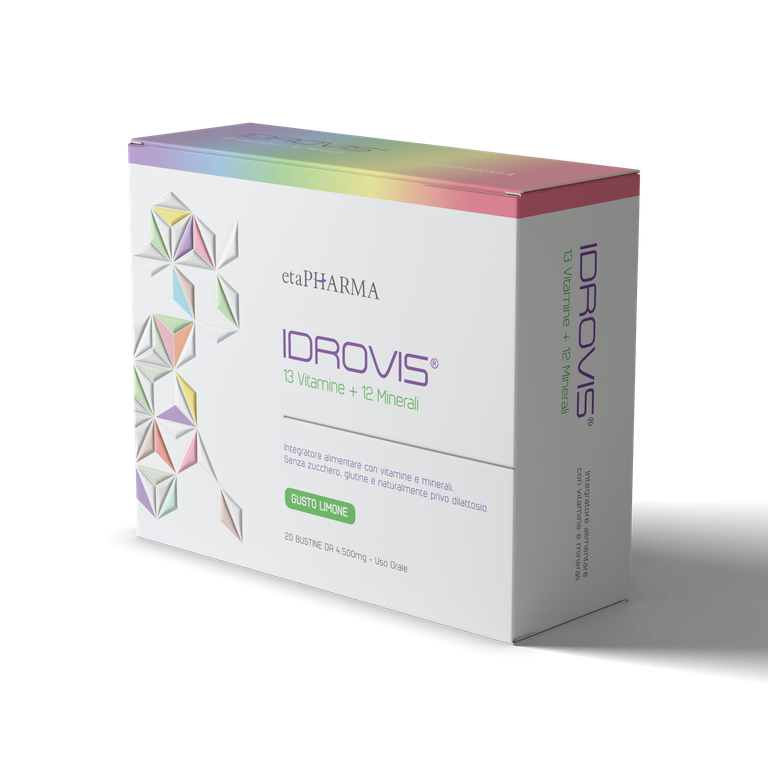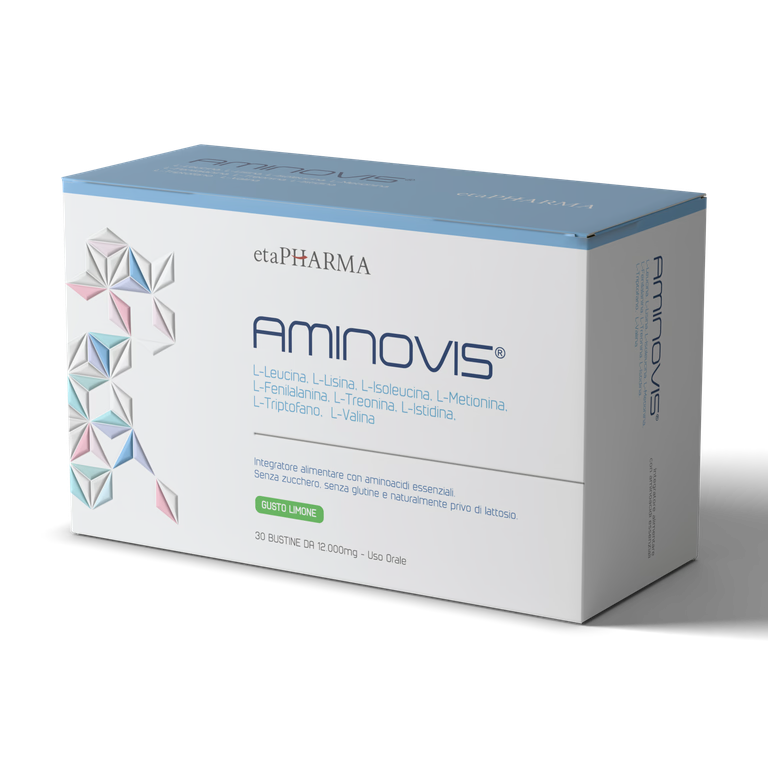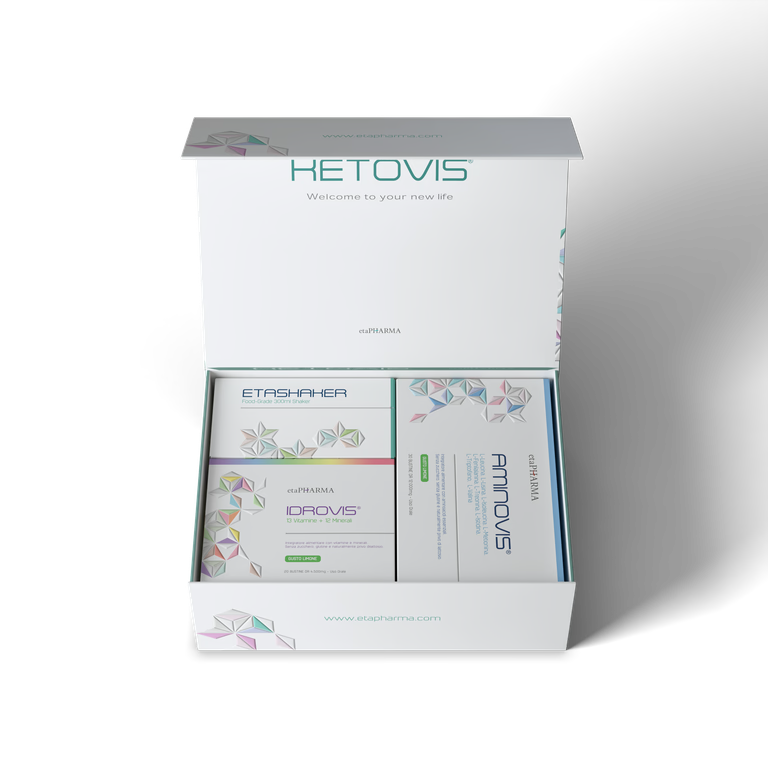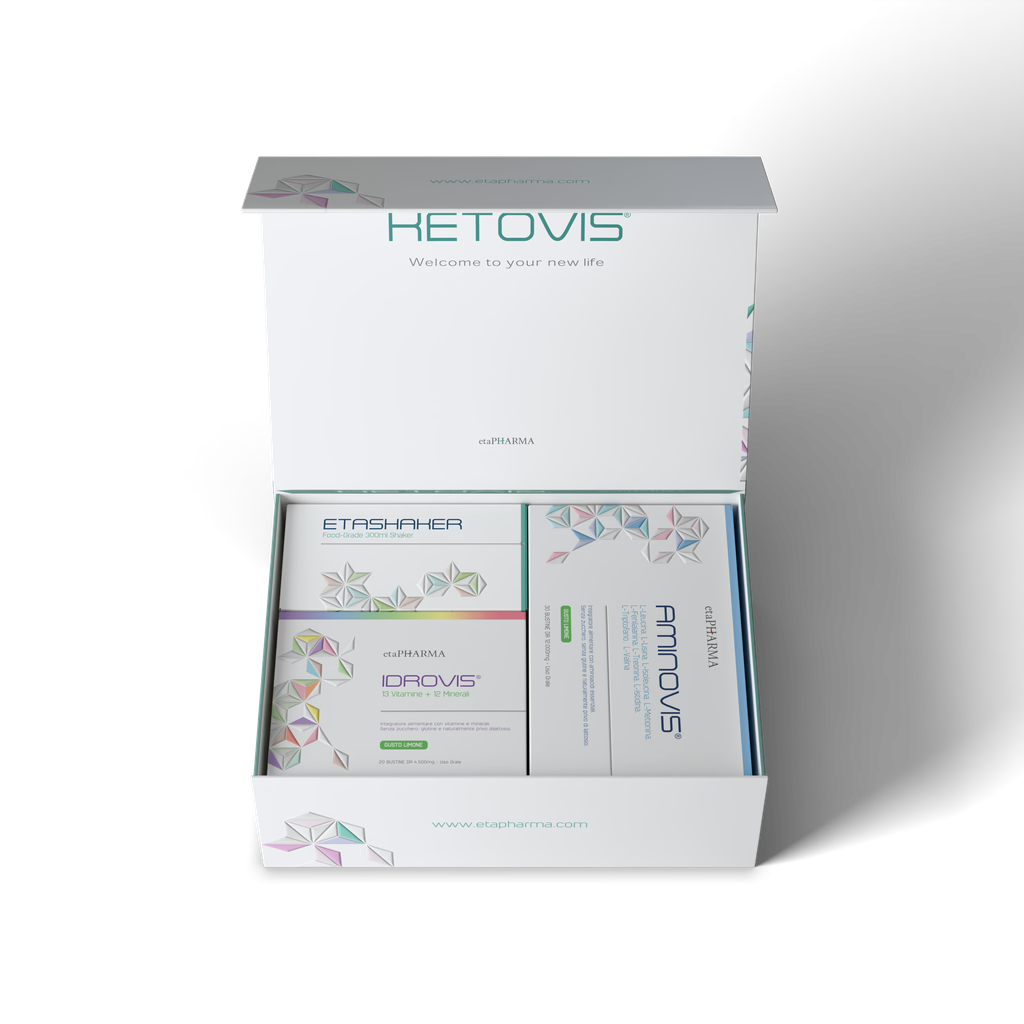
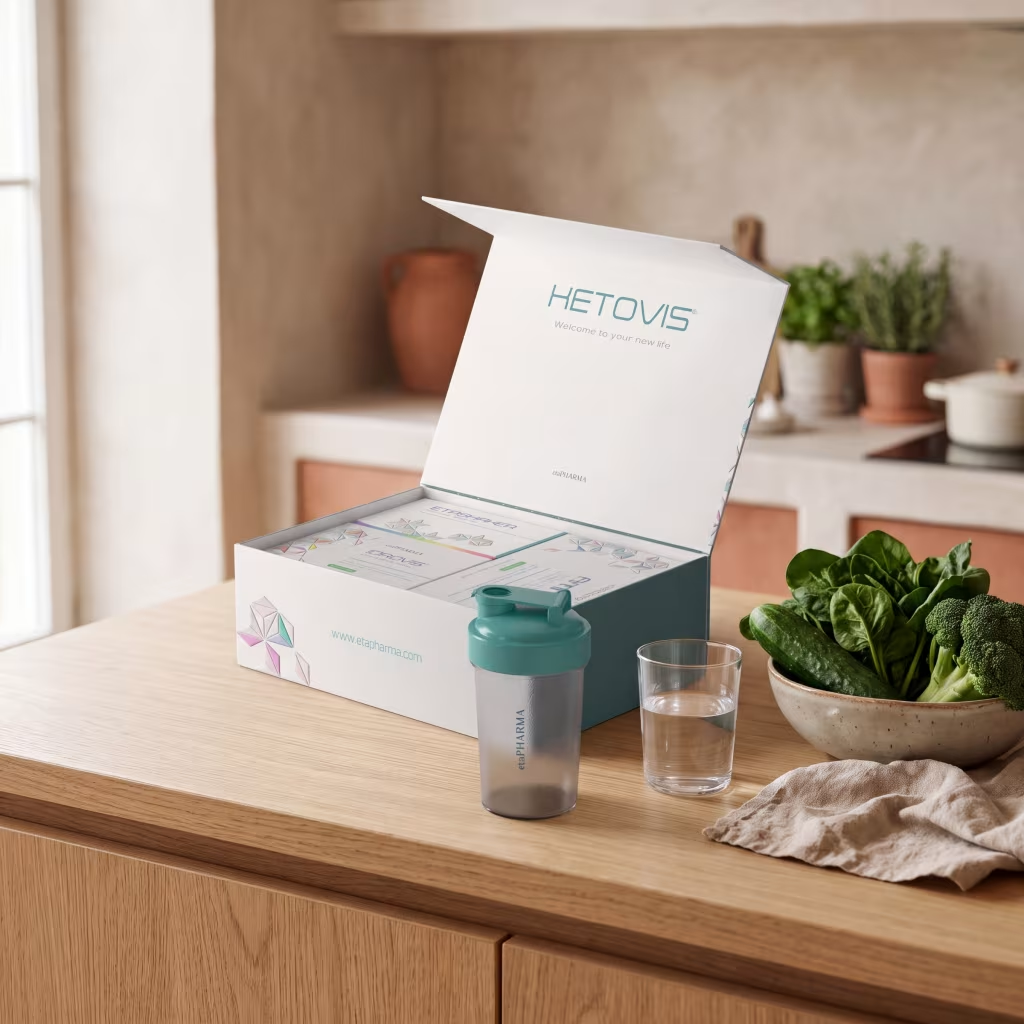
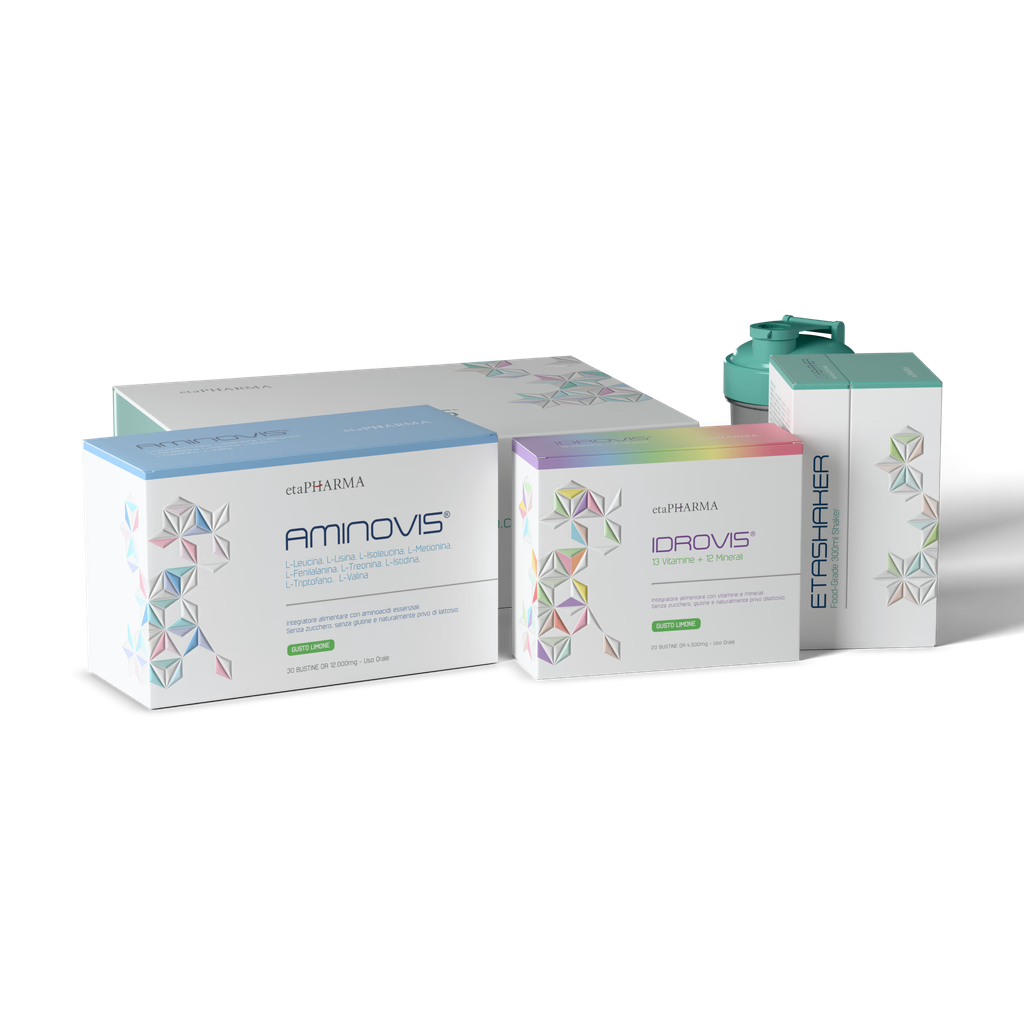

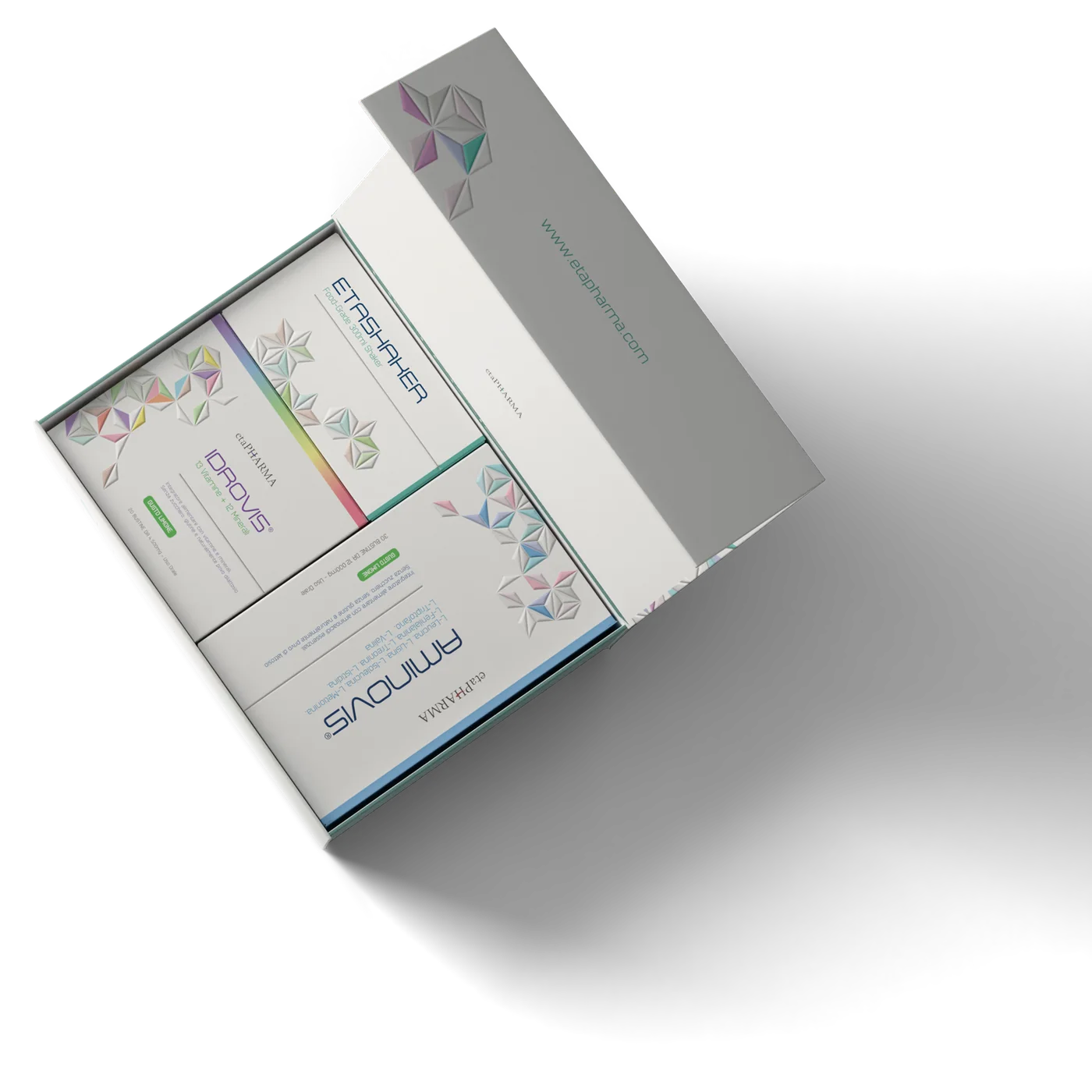


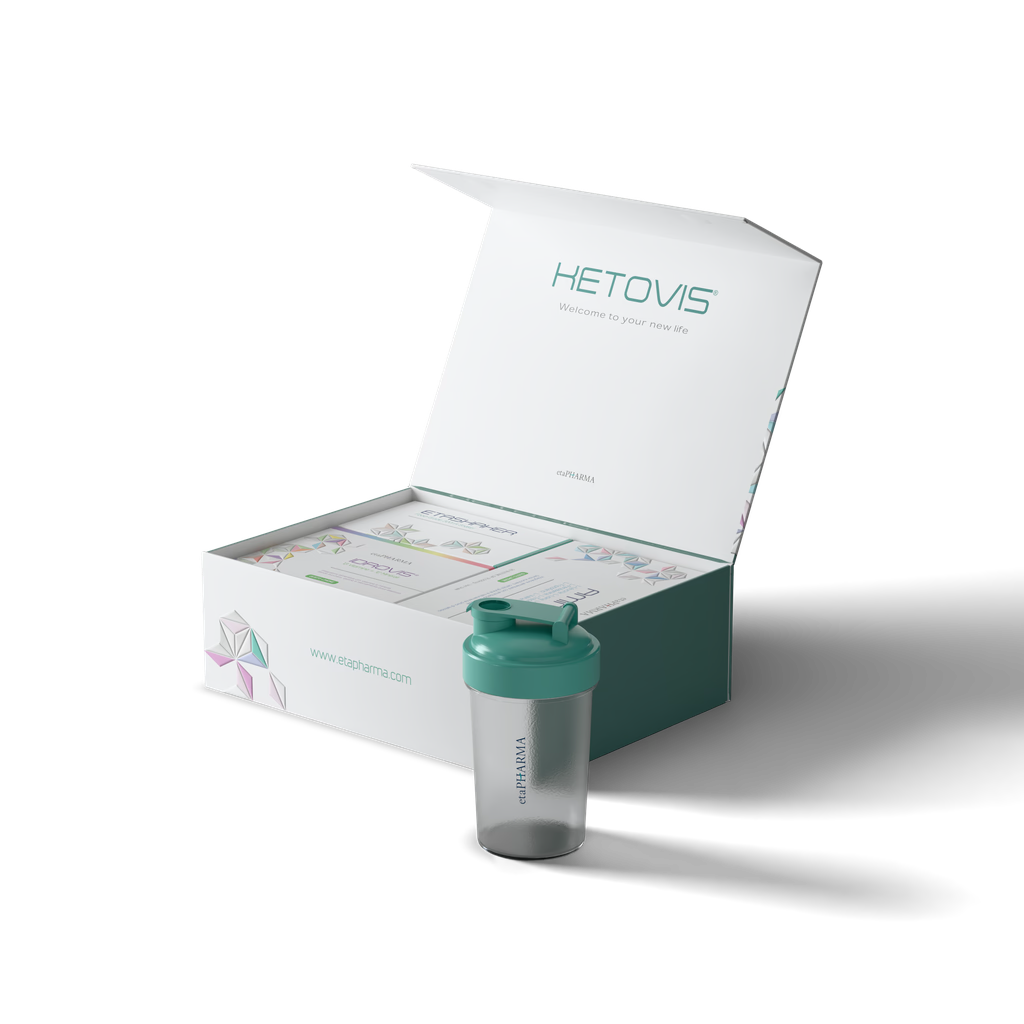
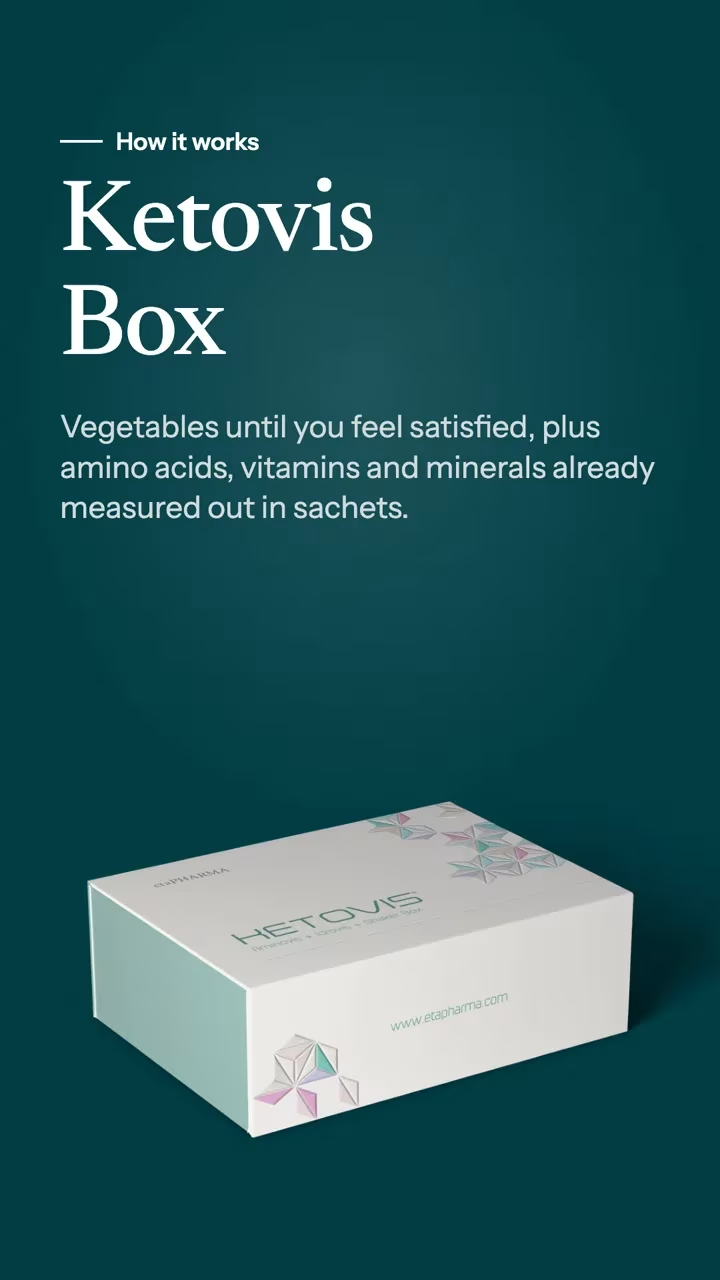









Open Ketovis Box with Aminovis, Idrovis and the Etashaker shaker in the box

Ten days, all in one box

  • 10days
  • 34nutrients
  • 5sachets per day
  • Inspired by the science of fasting, without hunger
Open Ketovis Box with the shaker on a kitchen worktop, next to fresh vegetables and a glass of water

10 days inspired by fasting, but eating

  1. Vegetables until you feel satisfiedAt every meal, without counting calories.
  2. 5 sachets a dayAminovis and Idrovis complete the vegetables.
  3. 16:8 fasting, if you like16 hours without calories, 8 for eating.
Contents of Ketovis Box: Aminovis, Idrovis, Etashaker shaker and box

What’s in the box

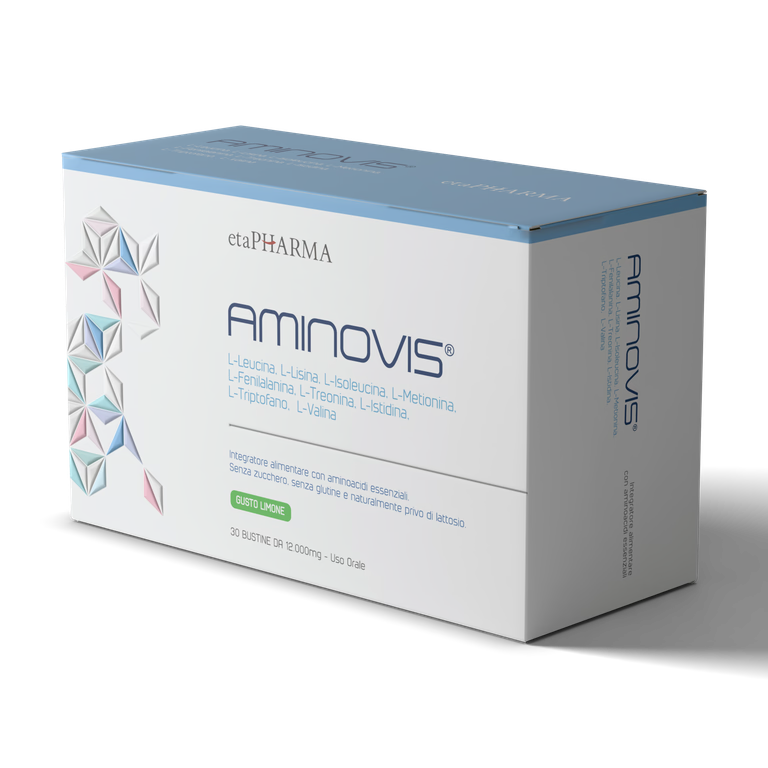
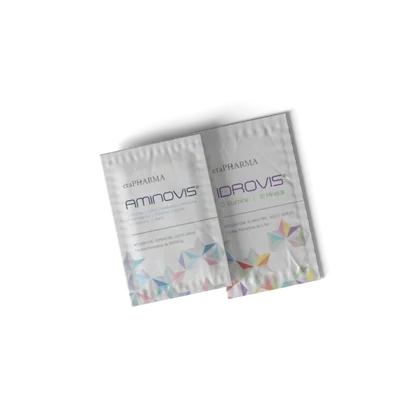
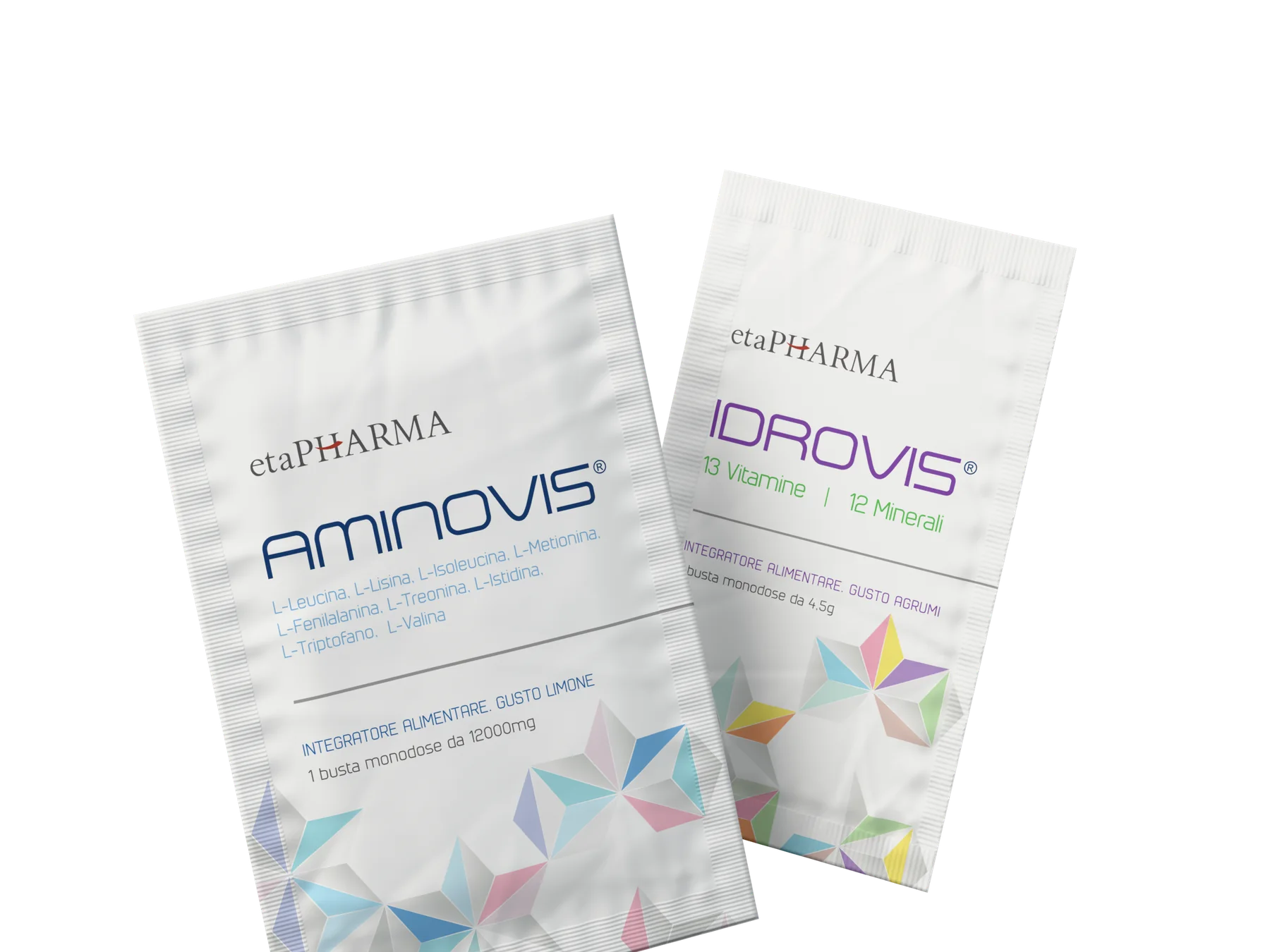
  • Aminovis®30 sachets, 3 a day
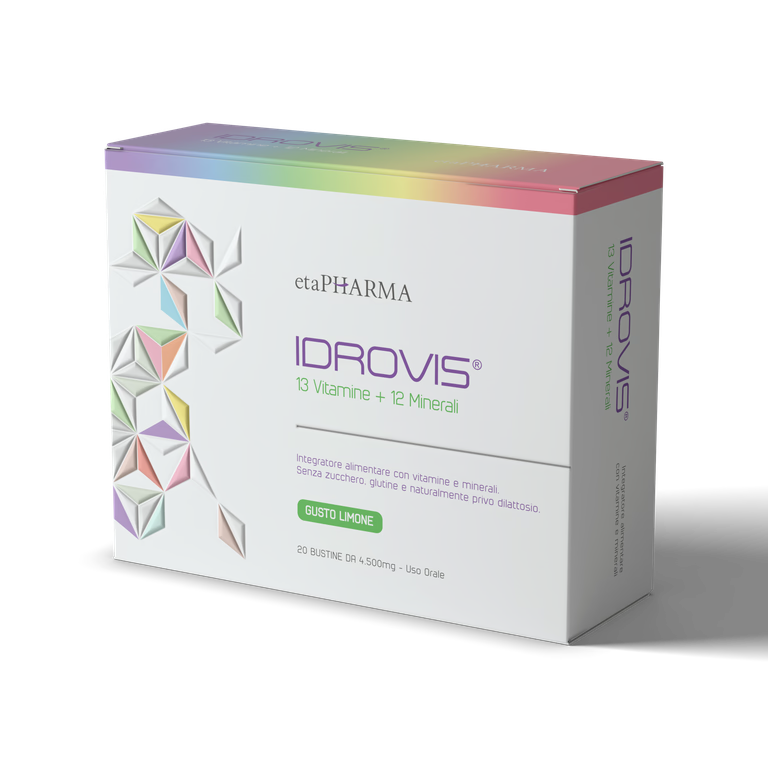
  • Idrovis®20 sachets, 2 a day
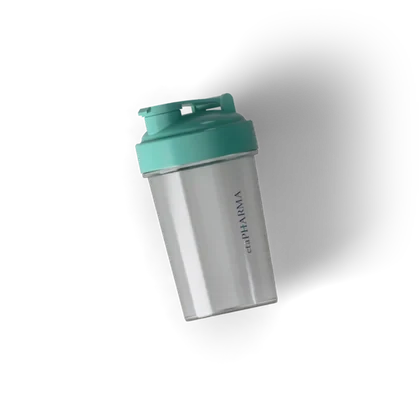
  • Shaker300 ml
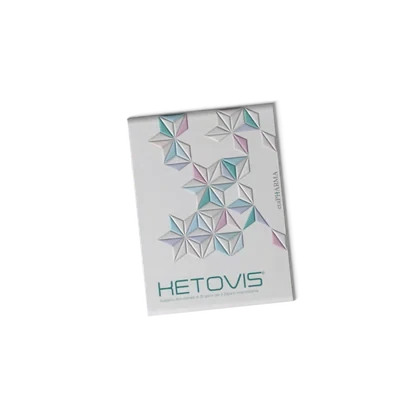
  • Food diary10-day guide
Ketovis Box from above with sachets, shaker and diary

For 10 days the body changes fuel

  1. Days 1–2The body is still using its sugar reserves
  2. Days 3–4The reserves run out and the body switches to fats
  3. Days 5–10Fat and ketones are the main fuel: this is ketosis

What studies on ketosis observe

  • Hunger does not increase, even with fewer calories
  • The weight lost is mostly fat, strength is maintained
  • Lower blood pressure, results maintained for up to 2 years

Studies on medically supervised ketogenic diets, not on Ketovis Box. Sources: Gibson et al., 2015; Gomez-Arbelaez et al., 2017; Castellana et al., 2020.

Lunch with salad and grilled vegetables, water, a shaker and Aminovis and Idrovis sachets

Your typical day: simple to follow

  1. BreakfastNo sachet
  2. Aminovis® + Idrovis®LunchAminovis + Idrovis
  3. Aminovis®Afternoon snackAminovis
  4. Aminovis® + Idrovis®DinnerAminovis + Idrovis
  • As many vegetables as you likeAt every meal
  • Water 2–3 litresAlso unsweetened tea, coffee and herbal teas
  • Light exerciseWalking, cycling, yoga
Ketovis Box from above with food diary, shaker and sachets

34 nutrients, each with a reason

  • 9essential amino acids
    • Essential: the body cannot produce them on its own
    • Contribute to meeting protein/nitrogen requirements
  • 13vitamins
    • C, B2, B6 and B12: less tiredness and fatigue
    • A, C and D: normal immune defences
  • 12minerals
    • Magnesium and potassium: normal muscle function
    • Zinc and selenium: cells protected from oxidative stress
Open Ketovis Box with the shaker beside it

161 EU-authorised benefits:

  • Less tiredness and fatigue
  • Normal fat metabolism
  • Normal blood glucose levels
  • Normal immune defences
  • Cells protected from oxidative stress
  • Normal muscle function
  • Normal psychological and cognitive function
  • Normal hair, skin and nails
  • Normal blood pressure
  • Normal energy-yielding metabolism
  • Normal bones and teeth
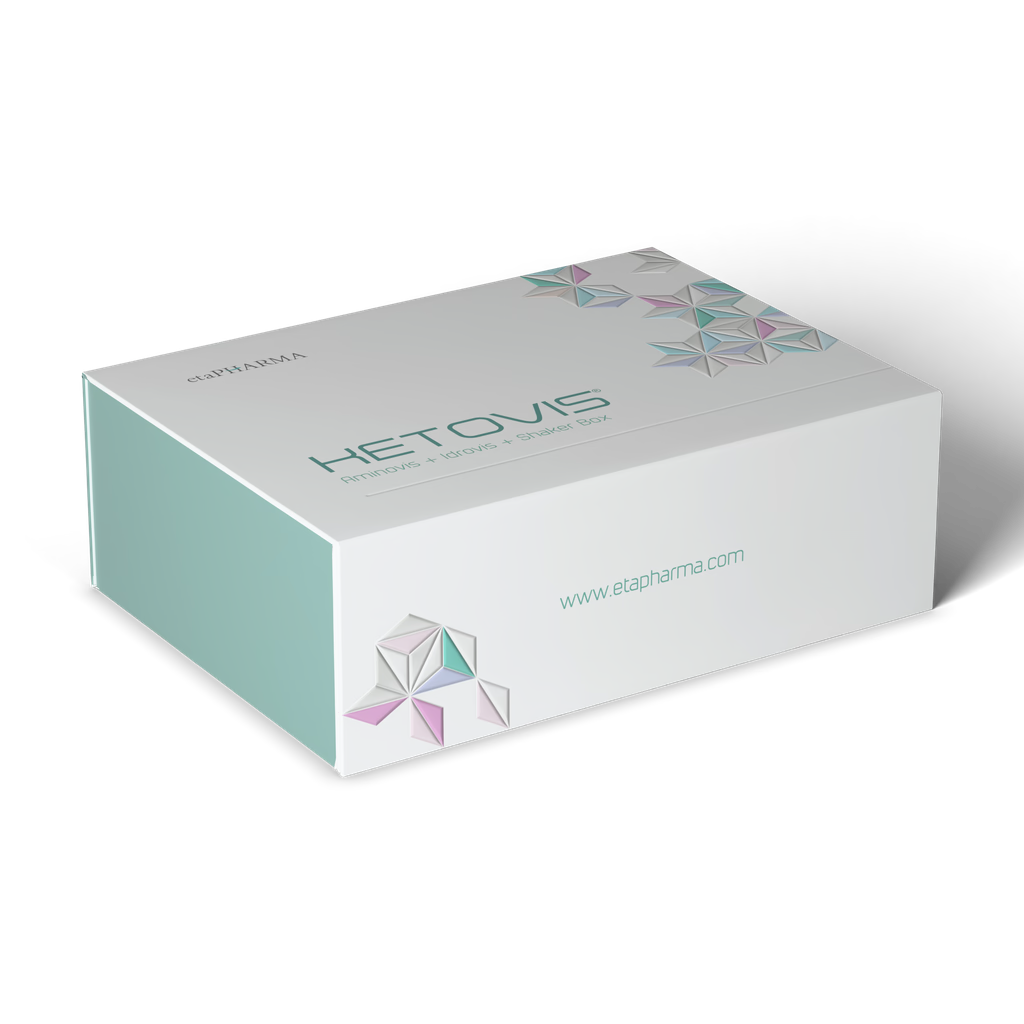
Closed Ketovis Box

“Fast delivery, excellent products. This is my third cycle with Ketovis and I’m doing very well. The products taste good (which isn’t a given).”

Oriana A. · Trustpilot · June 2025 · Translated from Italian
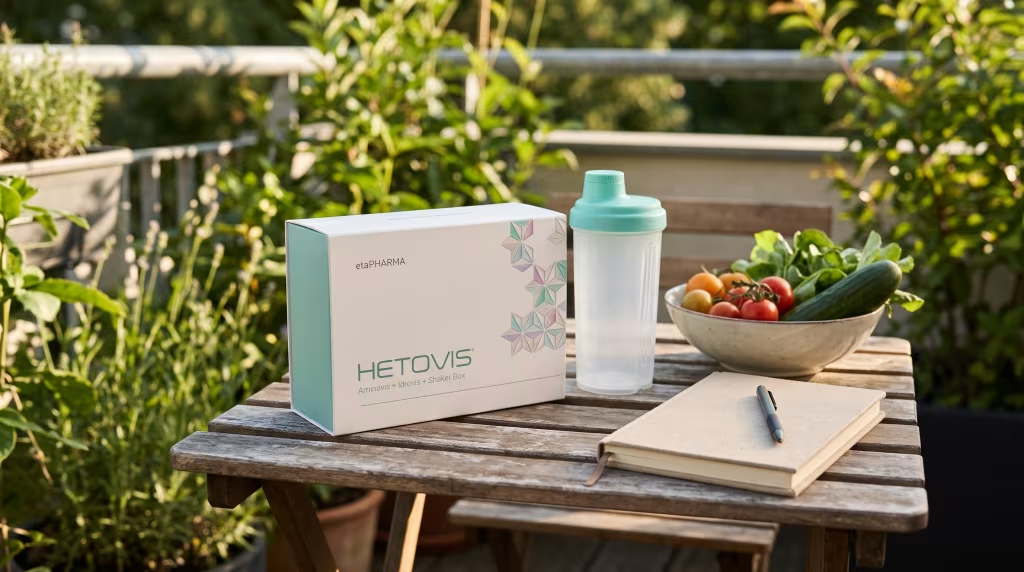
Ketovis Box on a terrace table with a shaker, vegetables and a diary

It’s simple.

10 days, vegetables until you feel satisfied and 5 sachets a day. No scales, no counting. That’s it.

130,000+customers in Italy

4.8/5Etapharma972 reviews on Google and Trustpilot

Ketovis Box

Ketovis Box

10-day kit for a plant-based diet: 5 sachets a day, shaker and diary included.

  • Less tiredness and fatigue
  • Covers protein requirements
  • Supports immune defences
  • +

No promises we cannot prove. How we work

4.8/5out of 5, average of Google and Trustpilot,130,000+ customers

10-day kit for a plant-based diet: 5 sachets a day, shaker and diary included.: 9 essential amino acids, 13 vitamins and 12 minerals every day, ready to use in sachets.

  • 10 days, 5 sachets a day
  • Made in Italy
Choose your pack

Order now, arrives in Italy Fri 27 – Mon 30 Nov

How it works

Three steps a day, for 10 days

No scales or calculations needed. Fasting is optional: you choose.

  1. Eat vegetables until you feel satisfied

    Low-sugar vegetables, raw or cooked, with a drizzle of oil. No weighing or counting: breakfast, lunch, afternoon snack and dinner at normal times.

  2. Take the sachets

    3 sachets of Aminovis and 2 of Idrovis a day, dissolved in water in the shaker: one minute in all.

  3. Drink 2–3 litres of water

    Tea, herbal teas and coffee are fine too, without sugar.

Every day

Your day with Ketovis

Vegetables until you feel satisfied and 5 sachets a day. That’s it.

  1. 08:00

    Breakfast

    • Vegetables of your choice: cucumbers, celery, cherry tomatoes or fennel
    • Or 30 g of berries or 5 g of nuts
    • Tea, coffee or herbal teas without sugar
  2. 13:00

    Lunch

    1 sachet of Aminovis 1 sachet of Idrovis

    • Vegetables until you feel satisfied
    • For example: mixed salad with olives and a drizzle of oil, grilled courgettes
    • 5 g of nuts or 30 g of berries
  3. 17:00

    Afternoon snack

    1 sachet of Aminovis

    • Vegetables of your choice, raw or cooked
  4. 20:00

    Dinner

    1 sachet of Aminovis 1 sachet of Idrovis

    • Vegetables until you feel satisfied
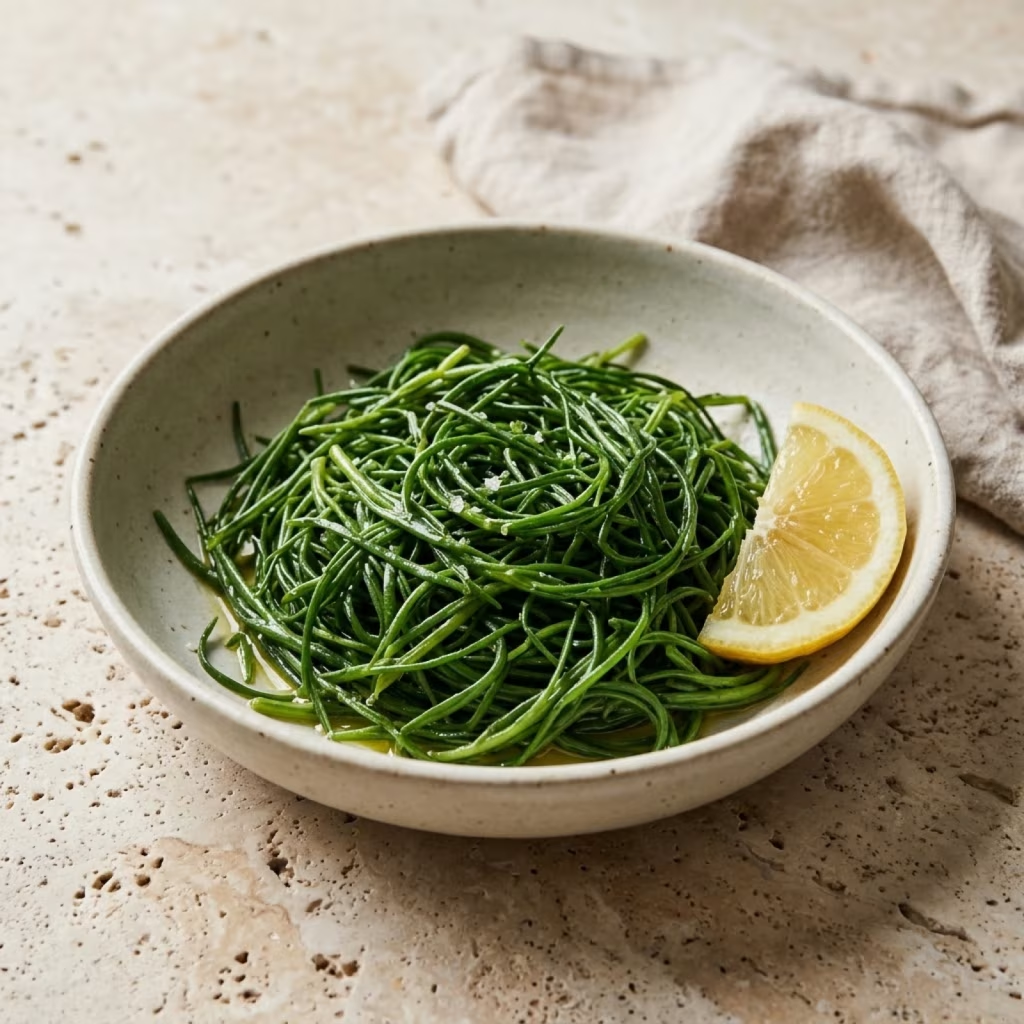
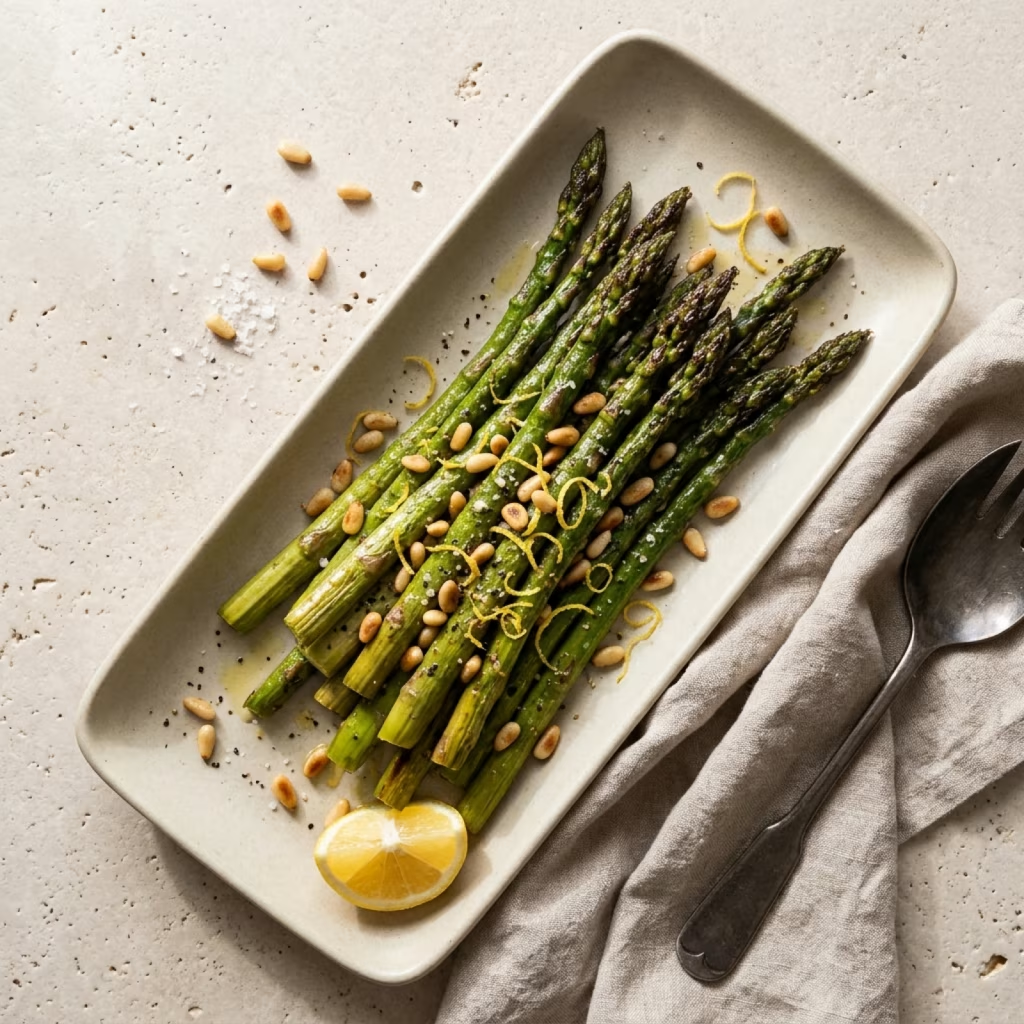
    • For example: steamed broccoli with oil and lemon, sautéed spinach
    • 5 g of nuts or 30 g of berries

During the day 2–3 litres of water, one glass at a time.

Ketovis on video

Reviews

What customers say about Etapharma

4.8out of 5 · 972 reviews

130,000+ customers across Italy

Etapharma rating (all products and the service): average of the Google and Trustpilot ratings.

Courteous, professional support centre…

“Fast delivery. Perfect packaging. Products that are simple to use. Clear instructions for use”, full review on Trustpilot (opens in a new tab)

Ste G.TrustpilotInvitedTranslated from Italian
Verified

fantastic experience

“I repeat the protocol every change of season …”, full review on Trustpilot (opens in a new tab)

Fabiola C.TrustpilotVerifiedTranslated from Italian
Verified

Everything perfect …

“The delivery arrived on time, and I bought the products at a good price”, full review on Trustpilot (opens in a new tab)

Simona G.TrustpilotVerifiedTranslated from Italian
Verified

Excellent products, I’ve used them for years

“Excellent products, I’ve used them for years”, full review on Trustpilot (opens in a new tab)

Violet H.TrustpilotVerifiedTranslated from Italian

The method

One method, four pillars

Ketovis Box combines a plant-based ketogenic diet, essential amino acids, vitamins and minerals and, if you wish, intermittent fasting. Each part has its role.

  1. Vegetables until you feel satisfied

    Low-sugar vegetables, raw or cooked, with a drizzle of olive oil, until you feel satisfied and without weighing them: lots of fibre, lots of water and few calories on every plate.

    Studies on vegetables
  2. Ketosis

    With very little sugar, after 3–4 days the body uses fats and ketone bodies as its main fuel. It is the same switch that happens in fasting.

    What happens day by day
  3. Complete supplementation

    Vegetables alone are not enough: Aminovis provides the 9 essential amino acids, Idrovis 13 vitamins and 12 minerals, with magnesium and potassium as citrates.

    What is lacking and why
  4. 16:8 fasting, if you like

    Optional: 16 hours without calories, including overnight, and all meals within the following 8 hours. It is one of the most studied forms of intermittent fasting.

    Studies on fasting

Why only vegetables

For 10 days the body changes fuel

  1. UsuallyThe fuel is the sugar from bread, pasta, sweets and fruit.
  2. 3–4 daysWith very little sugar the reserves run out and the body uses fat, turning it into ketone bodies: this is ketosis.
  3. 10 daysThe time to get there and stay there: that is why the protocol lasts 10 days.

And why vegetables?

They have very little sugar and plenty of water and fibre: they fill the plate without bringing the body back to sugars.

Which fuel the body draws energy from, day by day Indicative diagram: in the first two days sugars prevail; between the third and fourth day the two lines cross; from the fifth day fat prevails. days 3–4 1 2 3 4 5 6 7 8 9 10
Sugars Fat and ketone bodies Indicative diagram

Source: Paoli et al., Eur J Clin Nutr 2013 (opens in a new tab)

The weak point

What a vegetable-only diet lacks

Vegetables are light and rich in fibre, but on their own they do not provide everything you need each day. Studies point to three weak spots.

Complete proteins

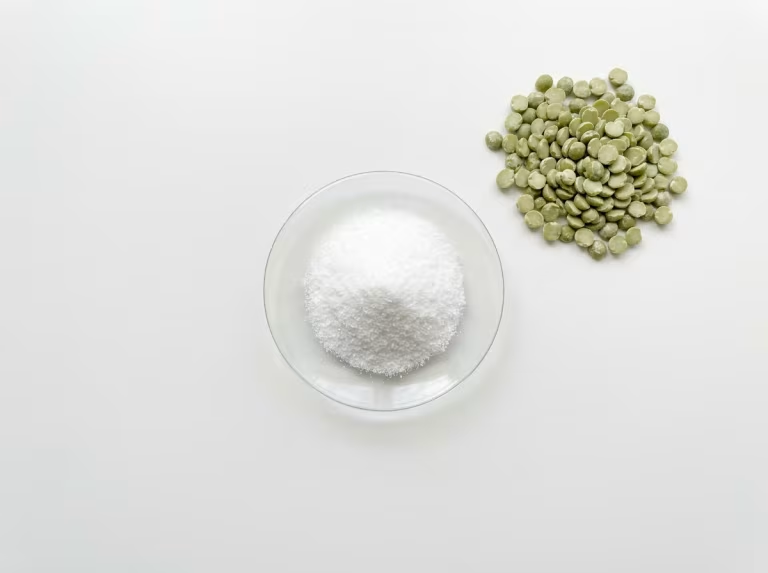
Proteins are made of amino acids. Nine are essential: the body cannot make them, so they must come from food every day. With vegetables alone there is little protein, and plant proteins contain little of some of these nine.

  • Leucine 5.31 g
  • Lysine 4.47 g (often low in plant proteins)
  • Isoleucine 4.20 g (often low in plant proteins)
  • Valine 3.36 g
  • Phenylalanine 2.79 g
  • Threonine 2.79 g (often low in plant proteins)
  • Methionine 1.95 g (often low in plant proteins)
  • Histidine 1.95 g
  • Tryptophan 1.11 g (often low in plant proteins)

Often low in plant proteins With Aminovis: all 9, grams per day

3 sachets of Aminovis provide 27.9 g a day as free amino acids: already separated, they do not need to be released from a whole protein. Essential amino acids contribute to meeting the protein/nitrogen requirement (Italian Ministry of Health guidelines).

Source: Mariotti e Gardner, Nutrients 2019 (opens in a new tab)

Vitamins and minerals

In plant-based diets the nutrients most often in short supply are vitamin B12, vitamin D, iron, zinc, calcium and iodine. Here is how much Ketovis Box provides in one day, compared with the reference intake:

  • Vitamin B12 200%5 µg
  • Vitamin D 100%5 µg
  • Iron 100%14 mg
  • Zinc 100%10 mg
  • Calcium 50%400 mg
  • Iodine 66.7%100 µg
  • Magnesium 50%187.5 mg

Percentage of the nutrient reference values (NRV) in 5 sachets. 100% = the average daily requirement of an adult.

Source: Lynch et al., Nutrients 2021 (opens in a new tab)

Water and minerals

In the first days of ketosis the body loses a lot of water and, with it, minerals. For ketogenic diets, Italian endocrinologists advise supplementing potassium and magnesium and drinking at least 2–2.5 litres a day.

  • 187.5 mgMagnesium as citrate, per day
  • 450 mgPotassium as citrate, per day

Magnesium contributes to electrolyte balance; magnesium and potassium contribute to normal muscle function (Reg. EU 432/2012).

Source: Barrea, 2024 (opens in a new tab)

That is why Ketovis Box exists: the diet does its part, the sachets complete it.

What you get

What's in the box

  • Aminovis®30 sachets, 3 a day€79.00
  • Idrovis®20 sachets, 2 a day€29.00
  • Shaker300 mlIncluded
  • Food diary10-day guideIncluded
Bought separately
€108.00
All in Ketovis Box
€99.00

Today’s prices for one pack of each product. The shaker and diary come only with the kit.

The research

What science says

Ketosis, vegetables, fasting and minerals: each pillar of the method and the studies that support it.

The studies concern the ketogenic diet, fasting and foods, often followed under medical supervision. Ketovis Box is a supplement that completes the diet with amino acids, vitamins and minerals.

Ketogenic diet

Review of 12 studies

Weight and waist circumference in people who are overweight

  • −10.0kgaverage weight, with ketosis up to 4 weeks
  • −15.6kgaverage weight, with ketosis beyond 4 weeks
  • −12.6cmwaist circumference
  • 7.5%dropped out of the diet, as with a classic low-calorie diet

Blood pressure also fell, and the weight lost stayed stable at follow-ups for up to two years.

Source: Castellana et al., 2020 (opens in a new tab)

Clinical study, 20 adults, 4 months

Where the weight lost comes from

  • 82%of the weight lost was fat (16.5 kg out of 20.2)

Of the 20.2 kg lost on average, about 8 was fat, and muscle strength stayed the same.

Source: Gomez-Arbelaez et al., 2017 (opens in a new tab)

Vegetables and satiety

Vegetables fill you up because they fill the plate with plenty of water and few calories: this is energy density.

Study of 42 women

A salad before the meal

  • −12%fewer calories in the meal, with a large, light salad beforehand

Starting with a large, light salad led to fewer calories eaten in the rest of the meal, without feeling hungrier.

Source: Rolls et al., J Am Diet Assoc 2004 (opens in a new tab)

Study of 24 women

The water inside food

  • 1,209kJlunch after a soup
  • ≈1,650kJafter the same ingredients with the water drunk separately

With the same calories, the same dish served as a soup reduced the following lunch by about a quarter; drinking the same water separately changed nothing.

Source: Rolls et al., Am J Clin Nutr 1999 (opens in a new tab)

Randomised study, 97 women, 1 year

More food, less hunger

People who added fruit and vegetables to their diet ate more food by weight and reported less hunger than those who only cut fat.

Source: Ello-Martin et al., 2007 (opens in a new tab)

Controlled fasting

Intermittent fasting is among the most studied eating habits: it works best alongside a diet, on its own it changes little.

Crossover study, 8 men, 5 weeks

Even with unchanged weight

Eating within a 6-hour window, with dinner before 3 pm, lowered insulin and blood pressure even without weight loss, and reduced the desire to eat in the evening.

Source: Sutton et al., Cell Metab 2018 (opens in a new tab)

Randomised study, 90 adults, 14 weeks

Together with a diet

  • −2.3kgmore with meals between 7 am and 3 pm, on the same diet

On a calorie-restricted diet followed under medical supervision, concentrating meals in the first 8 hours of the day led to an average of 2.3 kg more weight lost.

Source: Jamshed et al., JAMA Intern Med 2022 (opens in a new tab)

Randomised study, 116 adults, 12 weeks

16:8 on its own

Eating within 8 hours without changing what is on the plate did not lead to more weight loss than eating throughout the day. This is why, in Ketovis Box, what you eat is what counts, and fasting is optional.

Source: Lowe et al., JAMA Intern Med 2020 (opens in a new tab)

Randomised study, 139 adults, 1 year

With the same calories

At equal calories, eating within 8 hours gave the same results as simply cutting calories: what and how much you eat is what counts.

Source: Liu et al., N Engl J Med 2022 (opens in a new tab)

Fasting and autophagy

Autophagy is the system by which cells dismantle and recycle their own parts. The discovery of its mechanisms earned Yoshinori Ohsumi the 2016 Nobel Prize, and a lack of nutrients is its classic trigger.

2016 Nobel Prize in Physiology or Medicine

Yoshinori Ohsumi and autophagy

In his experiments on yeast, as soon as nutrients ran out the cells began to dismantle parts of themselves: about an hour was enough.

Source: Takeshige, 1992 (opens in a new tab)

Randomised study, 11 adults, 4 days

Eating early, within 6 hours

Eating between 8 am and 2 pm, rather than between 8 am and 8 pm, increased the expression of LC3A, a key autophagy gene, in blood cells.

Source: Jamshed et al., Nutrients 2019 (opens in a new tab)
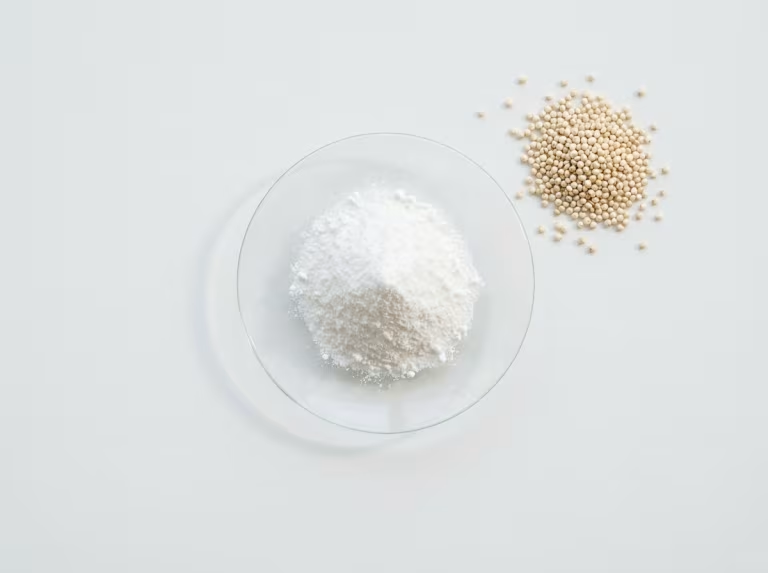
Water and minerals

In the first days of ketosis the body loses a lot of water and, with it, minerals. This is why the method includes 2–3 litres of water a day and, in Idrovis, magnesium and potassium.

Clinical study, 6 adults, 10 days

The first kilos are mostly water

  • 61.2%of the weight lost in the first 10 days was water

On the ketogenic diet, weight lost in the first days was largely water: at the start, water and minerals matter, not the scales.

Source: Yang e Van Itallie, 1976 (opens in a new tab)
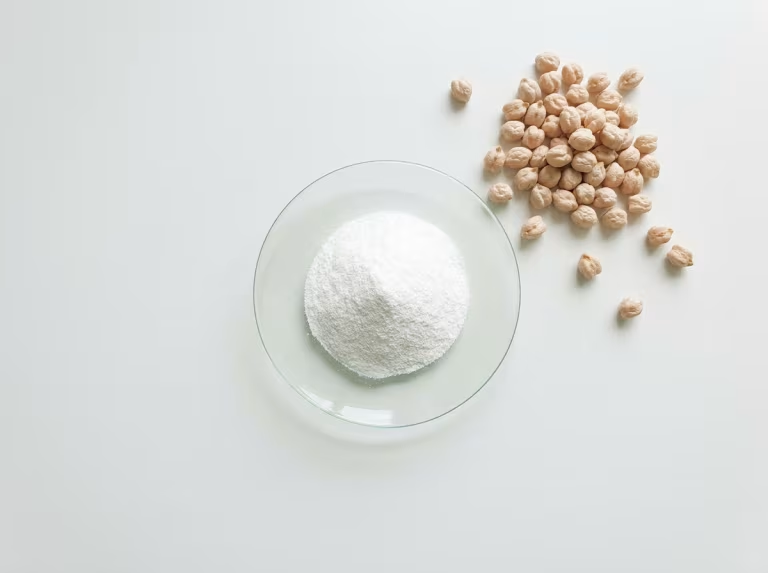
Italian Society of Endocrinology position paper

Mandatory vitamins and minerals

  • 2–2.5Lof water a day, at least

In the very-low-calorie ketogenic diet followed under medical supervision, experts indicate that supplementing vitamins and minerals, including potassium, sodium, magnesium and calcium, is mandatory, with at least 2–2.5 litres of water a day.

Source: Barrea, 2024 (opens in a new tab)
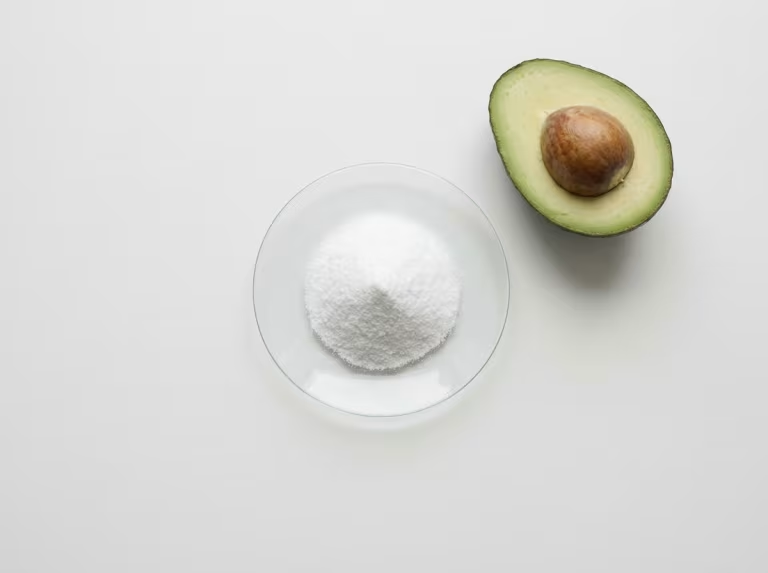
Review of 14 studies and a controlled study

Why citrate

In head-to-head comparisons, organic forms of magnesium, such as citrate, were absorbed better than inorganic ones such as oxide. In Ketovis the magnesium is citrate, as is the potassium.

Source: Pardo et al., Nutrition 2021 (opens in a new tab)
The Italian Society of Endocrinology has published a document on when the ketogenic diet is indicated, how long to follow it and for whom it is contraindicated. Talk to your doctor before starting. The paper (Caprio M. et al., 2019) (opens in a new tab)
The comparison

Ketovis Box and other diets compared

A comparison of the method: how each diet works, day by day.

Comparison between Ketovis Box and other types of diet
Ketovis Box Standard low-calorie diet Traditional ketogenic Meal replacements Intermittent fasting only
How long it lasts
10 days, to repeat with breaks
Weeks or months
Weeks
Weeks
No set end
Weighing food, counting
No
Yes, portions and calories
Yes, grams of carbohydrates
No
No, you count the hours
What and how much you eat
Vegetables until you feel satisfied
Everything, in smaller portions
Meat, fish, eggs, cheese, fats
Drinks or bars instead of meals
Everything, within a window of hours
Ketosis
Yes, with very few carbohydrates
No
Yes
Depends on the product
Usually not
Essential amino acids
Measured doses: 27.9 g per day
From food, depending on your choices
From meat, fish and eggs
From the proteins in the products
From food, depending on your choices
Vitamins and minerals
13 vitamins and 12 minerals every day
From food, depending on your choices
From food, with little fruit and few cereals
Often added to the products
From food, depending on your choices
Animal fats
No, plant-based only
Yes
A lot
Depends on the product
Yes
Fasting
Optional, 16:8 if you like
No
No
No
It is the method

What studies comparing types of diet say

Randomised clinical trial, 12 months

Very low-calorie ketogenic diet versus a standard low-calorie diet, people with obesity followed by a doctor:

Source: Moreno et al., Endocrine 2014 (opens in a new tab)
Review of 13 studies, 1,415 people

After a year or more, people who followed a ketogenic diet (less than 50 g of carbohydrates per day) lost on average 0.9 kg more than people who followed a low-fat diet.

Source: Bueno et al., Br J Nutr 2013 (opens in a new tab)
These studies compare types of diet followed for months, not Ketovis Box, which is a 10-day programme to repeat with breaks. We report them to explain the method it is based on.

Why choose it

Why Ketovis

  • Protection of cells

    Vitamin C, vitamin E, zinc, selenium, manganese, copper and riboflavin contribute to the protection of cells from oxidative stress.

    • Vitamin C 100%
    • Vitamin E 100%
    • Zinc 100%
  • Tiredness and fatigue

    Magnesium, iron, vitamin C, riboflavin, niacin, pantothenic acid, vitamin B6, folate and vitamin B12 contribute to the reduction of tiredness and fatigue.

    • Magnesium 50%
    • Iron 100%
    • Vitamin C 100%
  • Energy-yielding metabolism

    Calcium, phosphorus, magnesium, iron, manganese, copper, iodine, vitamin C, thiamine, riboflavin, niacin, pantothenic acid, vitamin B6, biotin and vitamin B12 contribute to normal energy-yielding metabolism.

    • Calcium 50%
    • Phosphorus 55%
    • Magnesium 50%
  • Muscle function

    Calcium, magnesium and potassium contribute to normal muscle function; vitamin D to the maintenance of normal muscle function.

    • Calcium 50%
    • Magnesium 50%
    • Potassium 22.5%
  • Immune system

    Vitamin A, vitamin C, vitamin D, vitamin B6, folate, vitamin B12, zinc, selenium, iron and copper contribute to the normal function of the immune system.

    • Vitamin A 100%
    • Vitamin C 100%
    • Vitamin D 100%
  • Nervous system and psychological function

    Potassium, magnesium, copper, iodine, vitamin C, thiamine, riboflavin, niacin, vitamin B6, biotin and vitamin B12 contribute to normal functioning of the nervous system; magnesium, vitamin C, thiamine, niacin, vitamin B6, folate, biotin and vitamin B12 to normal psychological function.

    • Potassium 22.5%
    • Magnesium 50%
    • Copper 100%
  • Bones and teeth

    Calcium is needed for the maintenance of normal bones and teeth; phosphorus, magnesium and vitamin D contribute to the maintenance of normal bones and teeth; zinc, manganese and vitamin K to the maintenance of normal bones.

    • Calcium 50%
    • Phosphorus 55%
    • Magnesium 50%
  • Skin, hair and nails

    Niacin, zinc, riboflavin, vitamin A, biotin and iodine contribute to the maintenance of normal skin; zinc, biotin and selenium to the maintenance of normal hair; zinc and selenium to the maintenance of normal nails. Vitamin C contributes to normal collagen formation for the normal function of skin.

    • Niacin 125%
    • Zinc 100%
    • Riboflavin 100%
  • Cognitive function

    Iron, zinc and iodine contribute to normal cognitive function; pantothenic acid to normal mental performance.

    • Iron 100%
    • Zinc 100%
    • Iodine 66.7%
  • Macronutrient metabolism

    Zinc, chromium and biotin contribute to normal macronutrient metabolism; chromium to the maintenance of normal blood glucose levels.

    • Zinc 100%
    • Chromium 400%
    • Biotin 200%
  • Vision

    Zinc, riboflavin and vitamin A contribute to the maintenance of normal vision.

    • Zinc 100%
    • Riboflavin 100%
    • Vitamin A 100%
  • Electrolyte balance

    Magnesium, here as citrate, contributes to electrolyte balance.

    • Magnesium 50%

Values per daily dose (5 sachets: 3 Aminovis + 2 Idrovis); % NRV.

Before you order

Will I be hungry?

Vegetables are eaten until you feel satisfied, without weighing them. In studies on the ketogenic diet hunger does not increase: on average people report slightly less hunger (Gibson et al., 2015). If you get hungry between meals, you can eat cucumbers or other recommended vegetables.

Can I manage it if I work all day?

Yes: the sachets are prepared in a minute in the shaker and vegetables are easy to take with you in a container. Fasting is optional: you can have breakfast, lunch, an afternoon snack and dinner at normal times. During the 10 days light physical activity is recommended.

Can everyone do it?

No. It should not be followed during pregnancy, while breastfeeding or under 18. In case of kidney failure, type 1 diabetes or other medical conditions, or if you take medicines regularly, talk to your doctor before you start.

How many times a year can I do it?

From 3 to 12 times a year, with at least 15 days’ break between one cycle and the next. Frequency and duration are best decided with a health professional.

Do I have to go without food for 10 days?

No. With Ketovis you eat the vegetables set out in the protocol until you feel satisfied, together with Aminovis and Idrovis. 16:8 intermittent fasting is optional: if you follow it, you take no calories for 16 hours (including overnight) and eat during the following 8.
What do the sachets taste like?

They have a fresh, citrusy taste, mainly lemon. Essential amino acids naturally have a strong, slightly sour taste: the latest formulation was developed to make them much more pleasant, with a taste reminiscent of lemonade or orangeade.

What do I do after the 10 days?

Once the protocol is over, gradually reintroduce other protein sources, such as meat and fish, together with plant foods, returning to a varied and balanced diet and keeping the good habits of the programme.

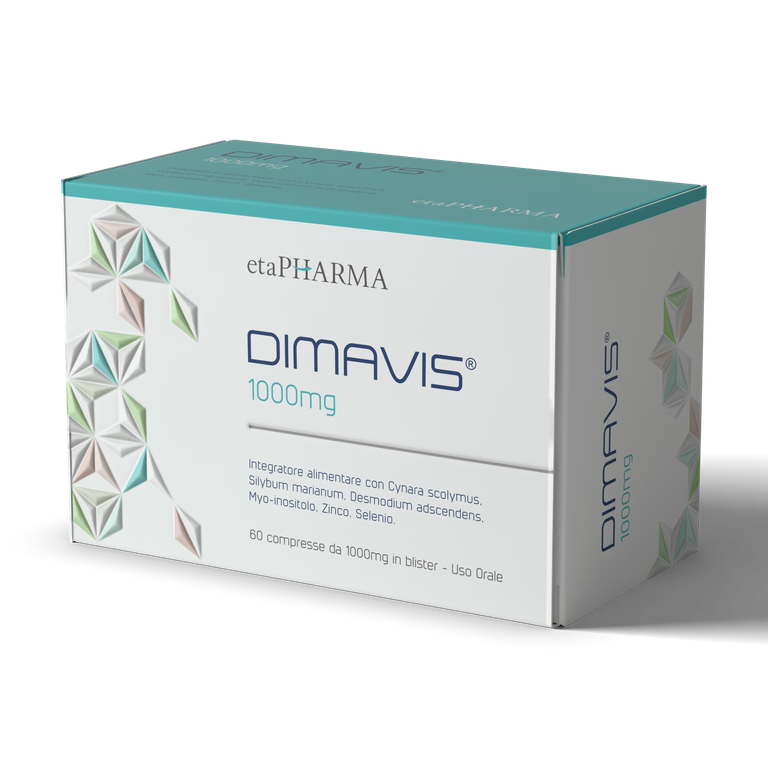
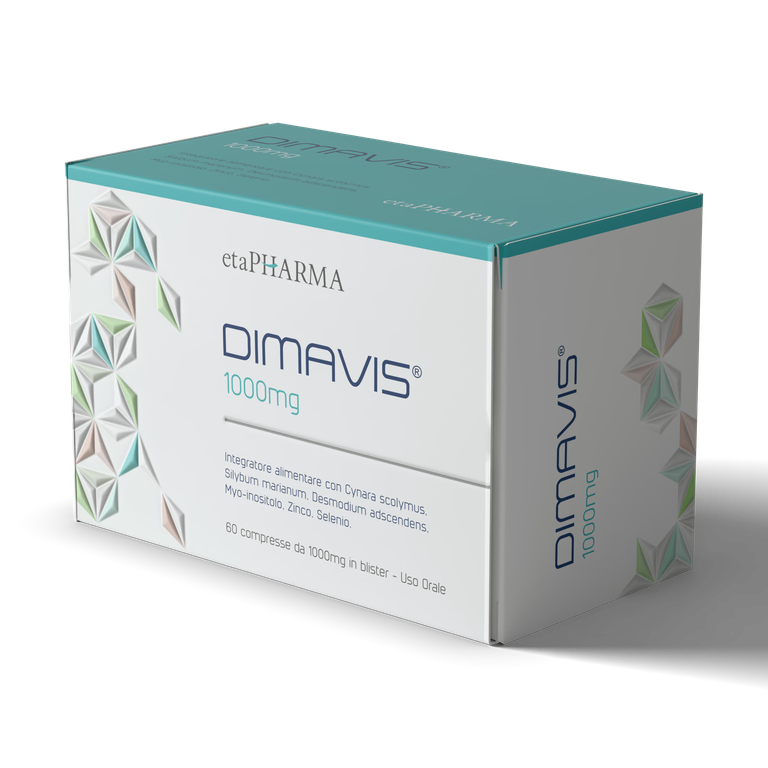
Can I combine it with Dimavis?

Yes: Dimavis can be combined with Ketovis during the protocol and in the phase that follows, keeping to the recommended dose of each product. If you are on a treatment or have particular conditions, ask your doctor first.

Ingredients and doses

The formula: 34 ingredients

  • Amino acid

    Branched-chain essential amino acid (BCAA), like isoleucine and valine: the body does not produce it, so it has to come from the diet. It is the most abundant amino acid in the formula. It is found in the proteins of pulses, cereals, dairy products, eggs, meat and fish.

    Amino acid · 5.31 g per day

  • Amino acid

    Essential amino acid, here as L-lysine hydrochloride. Cereals contain little of it; pulses and soya are among the richest plant sources.

    Amino acid · 4.47 g per day · L-lysine hydrochloride

  • Amino acid

    Branched-chain essential amino acid (BCAA), together with leucine and valine. It is found in pulses, nuts, eggs, dairy products and meat.

    Amino acid · 4.20 g per day

  • Amino acid

    Branched-chain essential amino acid (BCAA), with leucine and isoleucine. Food sources: pulses, wholegrain cereals, dairy products, meat and fish.

    Amino acid · 3.36 g per day

  • Amino acid

    Aromatic essential amino acid: its structure contains a benzene ring. It is found in soya, pulses, nuts, eggs and meat.

    Amino acid · 2.79 g per day

  • Amino acid

    Essential amino acid with a hydroxyl group in its side chain. Food sources: pulses, lentils, eggs, dairy products and fish.

    Amino acid · 2.79 g per day

  • Amino acid

    Essential amino acid that contains sulphur, which is why it is called sulphur-containing. It is found in eggs, fish, meat, nuts and seeds.

    Amino acid · 1.95 g per day

  • Amino acid

    Essential amino acid with an imidazole ring in its structure, here as L-histidine base. Food sources: meat, fish, pulses and wholegrain cereals.

    Amino acid · 1.95 g per day · L-histidine base

  • Amino acid

    Aromatic essential amino acid, present in small amounts in dietary proteins. It is found in seeds, nuts, pulses, oats, eggs and dairy products.

    Amino acid · 1.11 g per day

  • Mineral

    Mineral, here as potassium citrate, the potassium salt of citric acid. In the diet it comes mainly from fruit and vegetables: bananas, potatoes, pulses, spinach.

    Mineral · 450 mg per day · 22.5% NRV · Potassium citrate

    EU-authorised claims (Reg. 432/2012):

    • Potassium contributes to normal functioning of the nervous system.
    • Potassium contributes to normal muscle function.
    • Potassium contributes to the maintenance of normal blood pressure.
  • Mineral

    Mineral, here as tricalcium phosphate, which also provides the phosphorus in the formula. In the diet it comes from milk and dairy products, green leafy vegetables, almonds and calcium-rich mineral waters.

    Mineral · 400 mg per day · 50% NRV · Tricalcium phosphate

    EU-authorised claims (Reg. 432/2012):

    • Calcium contributes to normal energy-yielding metabolism.
    • Calcium contributes to normal muscle function.
    • Calcium contributes to normal neurotransmission.
    • Calcium contributes to the normal function of digestive enzymes.
    • Calcium is needed for the maintenance of normal bones.
    • Calcium contributes to normal blood clotting.
    • Calcium has a role in the process of cell division and specialisation.
    • Calcium is needed for the maintenance of normal teeth.
  • Mineral

    Mineral, provided by the tricalcium phosphate in the formula. It is found in many protein-rich foods: dairy products, meat, fish, pulses and wholegrain cereals.

    Mineral · 385 mg per day · 55% NRV · Tricalcium phosphate

    EU-authorised claims (Reg. 432/2012):

    • Phosphorus contributes to normal energy-yielding metabolism.
    • Phosphorus contributes to normal function of cell membranes.
    • Phosphorus contributes to the maintenance of normal bones.
    • Phosphorus contributes to the maintenance of normal teeth.
  • Mineral

    Mineral, here as magnesium citrate, the magnesium salt of citric acid. Food sources: nuts, seeds, pulses, wholegrain cereals and green leafy vegetables.

    Mineral · 187.5 mg per day · 50% NRV · Magnesium citrate

    EU-authorised claims (Reg. 432/2012):

    • Magnesium contributes to a reduction of tiredness and fatigue.
    • Magnesium contributes to electrolyte balance.
    • Magnesium contributes to normal energy-yielding metabolism.
    • Magnesium contributes to normal functioning of the nervous system.
    • Magnesium contributes to normal muscle function.
    • Magnesium contributes to normal protein synthesis.
    • Magnesium contributes to normal psychological function.
    • Magnesium contributes to the maintenance of normal bones.
    • Magnesium contributes to the maintenance of normal teeth.
    • Magnesium has a role in the process of cell division.
  • Vitamin

    Water-soluble vitamin, here as ascorbic acid. In the diet it comes from fresh fruit and vegetables: citrus fruits, kiwi, peppers, broccoli.

    Vitamin · 80 mg per day · 100% NRV · Ascorbic acid

    EU-authorised claims (Reg. 432/2012):

    • Vitamin C contributes to normal collagen formation for the normal function of skin.
    • Vitamin C contributes to normal energy-yielding metabolism.
    • Vitamin C contributes to the normal function of the immune system.
    • Vitamin C contributes to the protection of cells from oxidative stress.
    • Vitamin C contributes to the reduction of tiredness and fatigue.
    • Vitamin C contributes to normal collagen formation for the normal function of blood vessels.
    • Vitamin C contributes to normal collagen formation for the normal function of bones.
    • Vitamin C contributes to normal collagen formation for the normal function of cartilage.
    • Vitamin C contributes to normal collagen formation for the normal function of gums.
    • Vitamin C contributes to normal collagen formation for the normal function of teeth.
    • Vitamin C contributes to normal functioning of the nervous system.
    • Vitamin C contributes to normal psychological function.
    • Vitamin C contributes to the regeneration of the reduced form of vitamin E.
    • Vitamin C increases iron absorption.
  • Vitamin

    Water-soluble B-group vitamin, also called vitamin B3 or vitamin PP. It is found in meat, fish, pulses, wholegrain cereals and peanuts.

    Vitamin · 20 mg per day · 125% NRV · Vitamin B3

    EU-authorised claims (Reg. 432/2012):

    • Niacin contributes to normal energy-yielding metabolism.
    • Niacin contributes to the maintenance of normal skin.
    • Niacin contributes to the reduction of tiredness and fatigue.
    • Niacin contributes to normal functioning of the nervous system.
    • Niacin contributes to normal psychological function.
    • Niacin contributes to the maintenance of normal mucous membranes.
  • Mineral

    Mineral, here as ferric pyrophosphate (SunActive® Fe). In the diet it comes from pulses, green leafy vegetables, wholegrain cereals, meat and fish.

    Mineral · 14 mg per day · 100% NRV · Ferric pyrophosphate (SunActive® Fe)

    EU-authorised claims (Reg. 432/2012):

    • Iron contributes to normal energy-yielding metabolism.
    • Iron contributes to normal formation of red blood cells and haemoglobin.
    • Iron contributes to normal oxygen transport in the body.
    • Iron contributes to the normal function of the immune system.
    • Iron contributes to the reduction of tiredness and fatigue.
    • Iron contributes to normal cognitive function.
    • Iron has a role in the process of cell division.
  • Vitamin

    Fat-soluble vitamin: the name refers to a group of compounds, the tocopherols and tocotrienols. It is found in vegetable oils, nuts and seeds.

    Vitamin · 12 mg per day · 100% NRV

    EU-authorised claims (Reg. 432/2012):

    • Vitamin E contributes to the protection of cells from oxidative stress.
  • Mineral

    Trace element, here as zinc monomethionine, that is, zinc bound to the amino acid methionine. Food sources: pulses, seeds, wholegrain cereals, nuts, meat and dairy products.

    Mineral · 10 mg per day · 100% NRV · Zinc monomethionine

    EU-authorised claims (Reg. 432/2012):

    • Zinc contributes to normal carbohydrate metabolism.
    • Zinc contributes to normal macronutrient metabolism.
    • Zinc contributes to normal metabolism of fatty acids.
    • Zinc contributes to the normal function of the immune system.
    • Zinc contributes to the protection of cells from oxidative stress.
    • Zinc contributes to the maintenance of normal hair.
    • Zinc contributes to normal acid-base metabolism.
    • Zinc contributes to normal cognitive function.
    • Zinc contributes to normal DNA synthesis.
    • Zinc contributes to normal fertility and reproduction.
    • Zinc contributes to normal metabolism of vitamin A.
    • Zinc contributes to normal protein synthesis.
    • Zinc contributes to the maintenance of normal bones.
    • Zinc contributes to the maintenance of normal nails.
    • Zinc contributes to the maintenance of normal skin.
    • Zinc contributes to the maintenance of normal testosterone levels in the blood.
    • Zinc contributes to the maintenance of normal vision.
    • Zinc has a role in the process of cell division.
  • Vitamin

    Water-soluble B-group vitamin, also called vitamin B5. The name comes from the Greek pantothen, “from every side”: it is present in a great many foods.

    Vitamin · 6 mg per day · 100% NRV · Vitamin B5

    EU-authorised claims (Reg. 432/2012):

    • Pantothenic acid contributes to normal energy-yielding metabolism.
    • Pantothenic acid contributes to the reduction of tiredness and fatigue.
    • Pantothenic acid contributes to normal mental performance.
    • Pantothenic acid contributes to normal synthesis and metabolism of steroid hormones, vitamin D and some neurotransmitters.
  • Mineral

    Trace element, here as manganese gluconate. It is found in wholegrain cereals, nuts, pulses, tea and green leafy vegetables.

    Mineral · 2 mg per day · 100% NRV · Manganese gluconate

    EU-authorised claims (Reg. 432/2012):

    • Manganese contributes to normal energy-yielding metabolism.
    • Manganese contributes to the normal formation of connective tissue.
    • Manganese contributes to the protection of cells from oxidative stress.
    • Manganese contributes to the maintenance of normal bones.
  • Vitamin

    Water-soluble B-group vitamin, also called vitamin B2: it is a yellow-orange substance. It is found in milk and dairy products, eggs, almonds, mushrooms and green leafy vegetables.

    Vitamin · 1.4 mg per day · 100% NRV · Vitamin B2

    EU-authorised claims (Reg. 432/2012):

    • Riboflavin contributes to normal energy-yielding metabolism.
    • Riboflavin contributes to the maintenance of normal skin.
    • Riboflavin contributes to the protection of cells from oxidative stress.
    • Riboflavin contributes to the reduction of tiredness and fatigue.
    • Riboflavin contributes to normal functioning of the nervous system.
    • Riboflavin contributes to the maintenance of normal mucous membranes.
    • Riboflavin contributes to the maintenance of normal red blood cells.
    • Riboflavin contributes to the maintenance of normal vision.
    • Riboflavin contributes to the normal metabolism of iron.
  • Vitamin

    Water-soluble B-group vitamin: the name covers pyridoxine, pyridoxal and pyridoxamine. Food sources: pulses, wholegrain cereals, bananas, potatoes, fish and meat.

    Vitamin · 1.4 mg per day · 100% NRV

    EU-authorised claims (Reg. 432/2012):

    • Vitamin B6 contributes to normal energy-yielding metabolism.
    • Vitamin B6 contributes to normal protein and glycogen metabolism.
    • Vitamin B6 contributes to the normal function of the immune system.
    • Vitamin B6 contributes to the reduction of tiredness and fatigue.
    • Vitamin B6 contributes to normal cysteine synthesis.
    • Vitamin B6 contributes to normal functioning of the nervous system.
    • Vitamin B6 contributes to normal homocysteine metabolism.
    • Vitamin B6 contributes to normal psychological function.
    • Vitamin B6 contributes to normal red blood cell formation.
    • Vitamin B6 contributes to the regulation of hormonal activity.
  • Vitamin

    Water-soluble B-group vitamin, also called vitamin B1. It is found in wholegrain cereals, pulses, seeds, nuts and pork.

    Vitamin · 1.1 mg per day · 100% NRV · Vitamin B1

    EU-authorised claims (Reg. 432/2012):

    • Thiamine contributes to normal energy-yielding metabolism.
    • Thiamine contributes to normal functioning of the nervous system.
    • Thiamine contributes to the normal function of the heart.
    • Thiamine contributes to normal psychological function.
  • Mineral

    Trace element, here as copper gluconate. Food sources: nuts, seeds, pulses, cocoa, wholegrain cereals and shellfish.

    Mineral · 1 mg per day · 100% NRV · Copper gluconate

    EU-authorised claims (Reg. 432/2012):

    • Copper contributes to normal energy-yielding metabolism.
    • Copper contributes to normal hair pigmentation.
    • Copper contributes to the normal function of the immune system.
    • Copper contributes to the protection of cells from oxidative stress.
    • Copper contributes to maintenance of normal connective tissues.
    • Copper contributes to normal functioning of the nervous system.
    • Copper contributes to normal iron transport in the body.
    • Copper contributes to normal skin pigmentation.
  • Vitamin

    Fat-soluble vitamin: the name covers retinol and related compounds. Retinol is found in foods of animal origin; carrots, pumpkin and other orange vegetables contain beta-carotene, which the body converts into vitamin A.

    Vitamin · 800 µg per day · 100% NRV

    EU-authorised claims (Reg. 432/2012):

    • Vitamin A contributes to the maintenance of normal skin.
    • Vitamin A contributes to the maintenance of normal vision.
    • Vitamin A contributes to the normal function of the immune system.
    • Vitamin A contributes to normal iron metabolism.
    • Vitamin A contributes to the maintenance of normal mucous membranes.
    • Vitamin A has a role in the process of cell specialisation.
  • Vitamin

    Synthetic form of vitamin B9, folate. Natural folate is found in green leafy vegetables (the name comes from the Latin folium, leaf), pulses and citrus fruits.

    Vitamin · 200 µg per day · 100% NRV · Vitamin B9

    EU-authorised claims (Reg. 432/2012):

    • Folate contributes to normal amino acid synthesis.
    • Folate contributes to the normal function of the immune system.
    • Folate contributes to the reduction of tiredness and fatigue.
    • Folate contributes to normal blood formation.
    • Folate contributes to normal homocysteine metabolism.
    • Folate contributes to normal psychological function.
    • Folate has a role in the process of cell division.
  • Mineral

    Trace element, here as chromium picolinate, that is, trivalent chromium bound to picolinic acid. Food sources: wholegrain cereals, broccoli, pulses and nuts.

    Mineral · 160 µg per day · 400% NRV · Chromium picolinate

    EU-authorised claims (Reg. 432/2012):

    • Chromium contributes to normal macronutrient metabolism.
    • Chromium contributes to the maintenance of normal blood glucose levels.
  • Vitamin

    Water-soluble B-group vitamin, also called vitamin H, B7 or B8. It is found in eggs, nuts, seeds, pulses and yeast.

    Vitamin · 100 µg per day · 200% NRV · Vitamin H

    EU-authorised claims (Reg. 432/2012):

    • Biotin contributes to normal energy-yielding metabolism.
    • Biotin contributes to normal macronutrient metabolism.
    • Biotin contributes to the maintenance of normal hair.
    • Biotin contributes to the maintenance of normal skin.
    • Biotin contributes to normal functioning of the nervous system.
    • Biotin contributes to normal psychological function.
    • Biotin contributes to the maintenance of normal mucous membranes.
  • Mineral

    Trace element, here as potassium iodide. In the diet it comes from iodised salt, sea fish, dairy products and eggs.

    Mineral · 100 µg per day · 66.7% NRV · Potassium iodide

    EU-authorised claims (Reg. 432/2012):

    • Iodine contributes to normal energy-yielding metabolism.
    • Iodine contributes to normal cognitive function.
    • Iodine contributes to the normal production of thyroid hormones and normal thyroid function.
    • Iodine contributes to normal functioning of the nervous system.
    • Iodine contributes to the maintenance of normal skin.
  • Vitamin

    Fat-soluble vitamin, here in the K1 form (phylloquinone), the one found in plants. It is abundant in green leafy vegetables: spinach, cabbage, broccoli, lettuce.

    Vitamin · 75 µg per day · 100% NRV · Vitamin K1

    EU-authorised claims (Reg. 432/2012):

    • Vitamin K contributes to normal blood clotting.
    • Vitamin K contributes to the maintenance of normal bones.
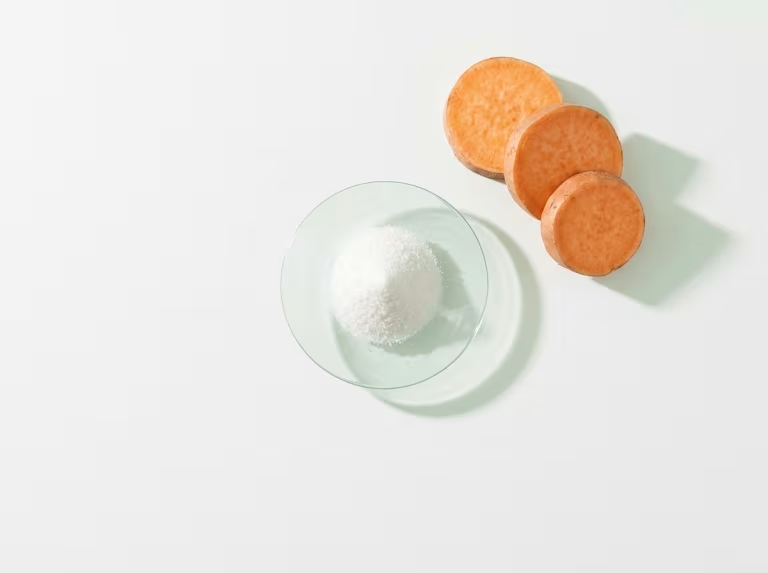
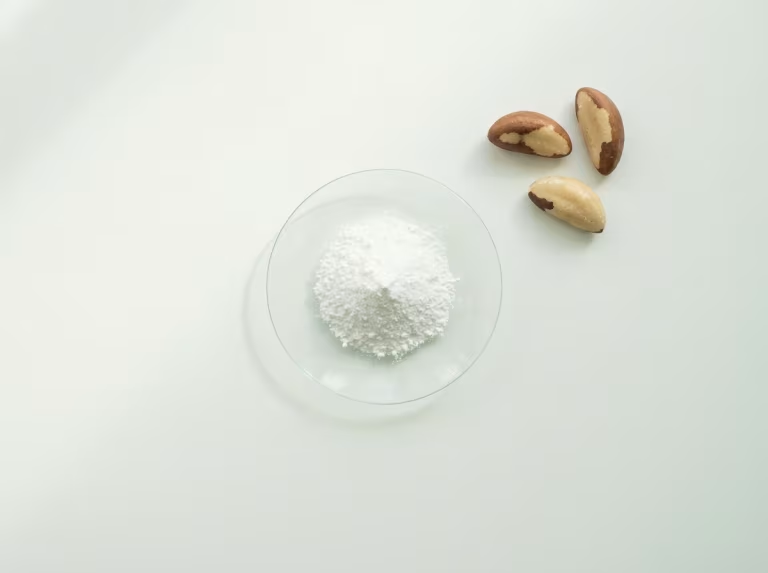
  • Mineral

    Trace element, here as selenomethionine, the form in which selenium is also found in cereals and pulses. Food sources: Brazil nuts, fish, eggs and cereals.

    Mineral · 55 µg per day · 100% NRV · Selenomethionine

    EU-authorised claims (Reg. 432/2012):

    • Selenium contributes to the protection of cells from oxidative stress.
    • Selenium contributes to the normal function of the immune system.
    • Selenium contributes to the maintenance of normal hair.
    • Selenium contributes to the maintenance of normal nails.
    • Selenium contributes to normal spermatogenesis.
    • Selenium contributes to the normal thyroid function.
  • Mineral

    Trace element, here as sodium molybdate. It is found in pulses, wholegrain cereals, nuts and offal.

    Mineral · 50 µg per day · 100% NRV · Sodium molybdate

    EU-authorised claims (Reg. 432/2012):

    • Molybdenum contributes to normal sulphur amino acid metabolism.
  • Vitamin

    Water-soluble B-group vitamin, also called cobalamin because it contains cobalt. In food it is found almost only in foods of animal origin; in plant-based diets it comes from fortified foods or supplements.

    Vitamin · 5 µg per day · 200% NRV

    EU-authorised claims (Reg. 432/2012):

    • Vitamin B12 contributes to normal energy-yielding metabolism.
    • Vitamin B12 contributes to normal functioning of the nervous system.
    • Vitamin B12 contributes to normal red blood cell formation.
    • Vitamin B12 contributes to the normal function of the immune system.
    • Vitamin B12 contributes to the reduction of tiredness and fatigue.
    • Vitamin B12 contributes to normal homocysteine metabolism.
    • Vitamin B12 contributes to normal psychological function.
    • Vitamin B12 has a role in the process of cell division.
  • Vitamin

    Fat-soluble vitamin, here in the D3 form (cholecalciferol). As well as coming from some foods, such as oily fish and eggs, it is formed in the skin when exposed to the sun.

    Vitamin · 5 µg per day · 100% NRV · Vitamin D3

    EU-authorised claims (Reg. 432/2012):

    • Vitamin D contributes to normal absorption/utilisation of calcium and phosphorus.
    • Vitamin D contributes to the maintenance of normal muscle function.
    • Vitamin D contributes to the maintenance of normal bones.
    • Vitamin D contributes to the normal function of the immune system.
    • Vitamin D contributes to normal blood calcium levels.
    • Vitamin D contributes to the maintenance of normal teeth.
    • Vitamin D has a role in the process of cell division.

Per daily dose

Nutrition information

Nutritional values

Per daily dose: 3 sachets of Aminovis (36 g) and 2 sachets of Idrovis (9 g)

Per daily dose: 3 sachets of Aminovis (36 g) and 2 sachets of Idrovis (9 g) Values per pack: daily dose for 10 days
Component Per dose Per pack % NRV*
Energy 104.3 kcal (436.4 kJ) 1,043 kcal (4,364 kJ)
Amino acids 9
L-leucine 5.31 g 53.1 g not established
L-lysine 4.47 g 44.7 g not established
L-isoleucine 4.20 g 42 g not established
L-valine 3.36 g 33.6 g not established
L-phenylalanine 2.79 g 27.9 g not established
L-threonine 2.79 g 27.9 g not established
L-methionine 1.95 g 19.5 g not established
L-histidine 1.95 g 19.5 g not established
L-tryptophan 1.11 g 11.1 g not established
Minerals 12
Potassium 450 mg 4,500 mg 22.5%
Calcium 400 mg 4,000 mg 50%
Phosphorus 385 mg 3,850 mg 55%
Magnesium 187.5 mg 1,875 mg 50%
Iron 14 mg 140 mg 100%
Zinc 10 mg 100 mg 100%
Manganese 2 mg 20 mg 100%
Copper 1 mg 10 mg 100%
Chromium 160 µg 1,600 µg 400%
Iodine 100 µg 1,000 µg 66.7%
Selenium 55 µg 550 µg 100%
Molybdenum 50 µg 500 µg 100%
Vitamins 13
Vitamin C 80 mg 800 mg 100%
Niacin 20 mg 200 mg 125%
Vitamin E 12 mg 120 mg 100%
Pantothenic acid 6 mg 60 mg 100%
Riboflavin 1.4 mg 14 mg 100%
Vitamin B6 1.4 mg 14 mg 100%
Thiamin 1.1 mg 11 mg 100%
Vitamin A 800 µg 8,000 µg 100%
Folic acid 200 µg 2,000 µg 100%
Biotin 100 µg 1,000 µg 200%
Vitamin K 75 µg 750 µg 100%
Vitamin B12 5 µg 50 µg 200%
Vitamin D 5 µg 50 µg 100%

* Daily reference intake values for an adult (EU Reg. 1169/2011). The bar stops at 100%, the “+” sign indicates a value above 100%. “—”: reference value not established.

Energy per daily dose: Aminovis 101.8 kcal, Idrovis 2.5 kcal. No nutrient reference values have been established for amino acids.

Values per pack: daily dose multiplied by 10 days of use. The % NRV refers to the daily dose only.

Weight by category Share of the weight of declared components (29.5 g per dose)
  • Amino acids 9 components 95% 27.9 g
  • Minerals 12 components 4.9% 1.45 g
  • Vitamins 13 components 0.4% 123 mg

Ingredients and warnings

Label

Ingredients
Aminovis® 12,000 mg

L-leucine; L-lysine HCl; L-isoleucine; L-valine; L-phenylalanine; L-threonine; Sodium bicarbonate; L-histidine base; L-methionine; Tartaric acid; L-tryptophan; Lemon flavouring; Citric acid; Maltodextrin; Anti-caking agent: Silicon dioxide; Sweetener: Sucralose.

Idrovis® 4,500 mg

Maltodextrins; Flavourings; Magnesium citrate; Potassium citrate; Acid: Citric acid; Tricalcium phosphate; Anti-caking agent: Silicon dioxide; Ferric pyrophosphate (SunActive® Fe); Vitamin C (Ascorbic acid); Zinc monomethionine; Sweeteners: Acesulfame K, Sucralose; Vitamin E; Vitamin B3; Manganese gluconate; Selenomethionine; Copper gluconate; Vitamin B5; Vitamin A; Vitamin D3; Vitamin K1; Vitamin B2; Vitamin B6; Sodium molybdate; Chromium picolinate; Vitamin B1; Vitamin B9; Potassium iodide; Vitamin H; Vitamin B12.

How to use

The Ketovis® protocol lasts 10 days and involves taking 5 sachets a day (3 sachets of Aminovis® and 2 sachets of Idrovis®).

Aminovis® 12,000 mg

Pour the contents of one sachet into about 180 ml of water, shake in the shaker and drink immediately. Recommended daily intake: up to 3 sachets.

Idrovis® 4,500 mg

Pour the contents of one sachet into about 150 ml of water, shake in the shaker and drink immediately. Recommended daily intake: up to 2 sachets.

During the protocol, drink enough water and eat the vegetables listed in the diary included.

Warnings

Ketovis® must not be used during pregnancy, while breastfeeding or by children, unless otherwise advised by a doctor. If you have kidney failure, type 1 diabetes or other medical conditions, consult your doctor before use. Do not exceed the recommended daily dose. Food supplements should not be used as a substitute for a varied and balanced diet and a healthy lifestyle. Not recommended in case of known hypersensitivity to one or more ingredients. Do not use for prolonged periods without consulting a doctor. The product is not intended to replace main meals. Keep out of reach of young children. Store in a cool, dry place, away from heat sources and direct light. The best-before date refers to the product correctly stored in its unopened pack.

The food diary included is for illustrative and information purposes only: its guidance does not replace the advice of a doctor or other health professional. Ketovis is not a therapeutic treatment.

Technical sheet
Name of the food
Food supplement
Format
30 sachets of 12 g · 20 sachets of 4.5 g · 300 ml shaker · diary
Net weight
450 g ℮
Daily dose
5 sachets: 3 Aminovis + 2 Idrovis
Duration
10 days per Box
Category
Food supplements (Legislative Decree 169/2004)
Production
Manufacturing site in Carruba di Riposto (CT), Italy
Storage
In a cool, dry place, away from light and sources of heat
Manufacturer
Etapharma S.r.l., Via Dogliotti 1, 93014 Mussomeli (CL)
Batch and best before
Best before 06/2028 · Batches: Aminovis AN0225 (08/2028) · Idrovis DV0125 (06/2028)
Notes on the claims
  • Protection of cellsVitamin C, vitamin E, zinc, selenium, manganese, copper and riboflavin contribute to the protection of cells from oxidative stress.
  • Tiredness and fatigueMagnesium, iron, vitamin C, riboflavin, niacin, pantothenic acid, vitamin B6, folate and vitamin B12 contribute to the reduction of tiredness and fatigue.
  • Energy-yielding metabolismCalcium, phosphorus, magnesium, iron, manganese, copper, iodine, vitamin C, thiamine, riboflavin, niacin, pantothenic acid, vitamin B6, biotin and vitamin B12 contribute to normal energy-yielding metabolism.
  • Muscle functionCalcium, magnesium and potassium contribute to normal muscle function; vitamin D to the maintenance of normal muscle function.
  • Immune systemVitamin A, vitamin C, vitamin D, vitamin B6, folate, vitamin B12, zinc, selenium, iron and copper contribute to the normal function of the immune system.
  • Nervous system and psychological functionPotassium, magnesium, copper, iodine, vitamin C, thiamine, riboflavin, niacin, vitamin B6, biotin and vitamin B12 contribute to normal functioning of the nervous system; magnesium, vitamin C, thiamine, niacin, vitamin B6, folate, biotin and vitamin B12 to normal psychological function.
  • Bones and teethCalcium is needed for the maintenance of normal bones and teeth; phosphorus, magnesium and vitamin D contribute to the maintenance of normal bones and teeth; zinc, manganese and vitamin K to the maintenance of normal bones.
  • Skin, hair and nailsNiacin, zinc, riboflavin, vitamin A, biotin and iodine contribute to the maintenance of normal skin; zinc, biotin and selenium to the maintenance of normal hair; zinc and selenium to the maintenance of normal nails. Vitamin C contributes to normal collagen formation for the normal function of skin.
  • Cognitive functionIron, zinc and iodine contribute to normal cognitive function; pantothenic acid to normal mental performance.
  • Macronutrient metabolismZinc, chromium and biotin contribute to normal macronutrient metabolism; chromium to the maintenance of normal blood glucose levels.
  • VisionZinc, riboflavin and vitamin A contribute to the maintenance of normal vision.
  • Electrolyte balanceMagnesium, here as citrate, contributes to electrolyte balance.

Claims from Reg. (EU) No 432/2012. Food supplements should not be used as a substitute for a varied and balanced diet and a healthy lifestyle.

Recipes for your 10 days

Only the foods recommended in the protocol, ready in a few minutes. Choose your start day and we prepare meals and shopping list.

All recipes
I start today: plan my week Meals day by day, sachets, shopping list and calendar reminders.